Warehouse Floor Cleaning: Manual Cleaning vs Industrial Floor Scrubber
Aug 05, 2026
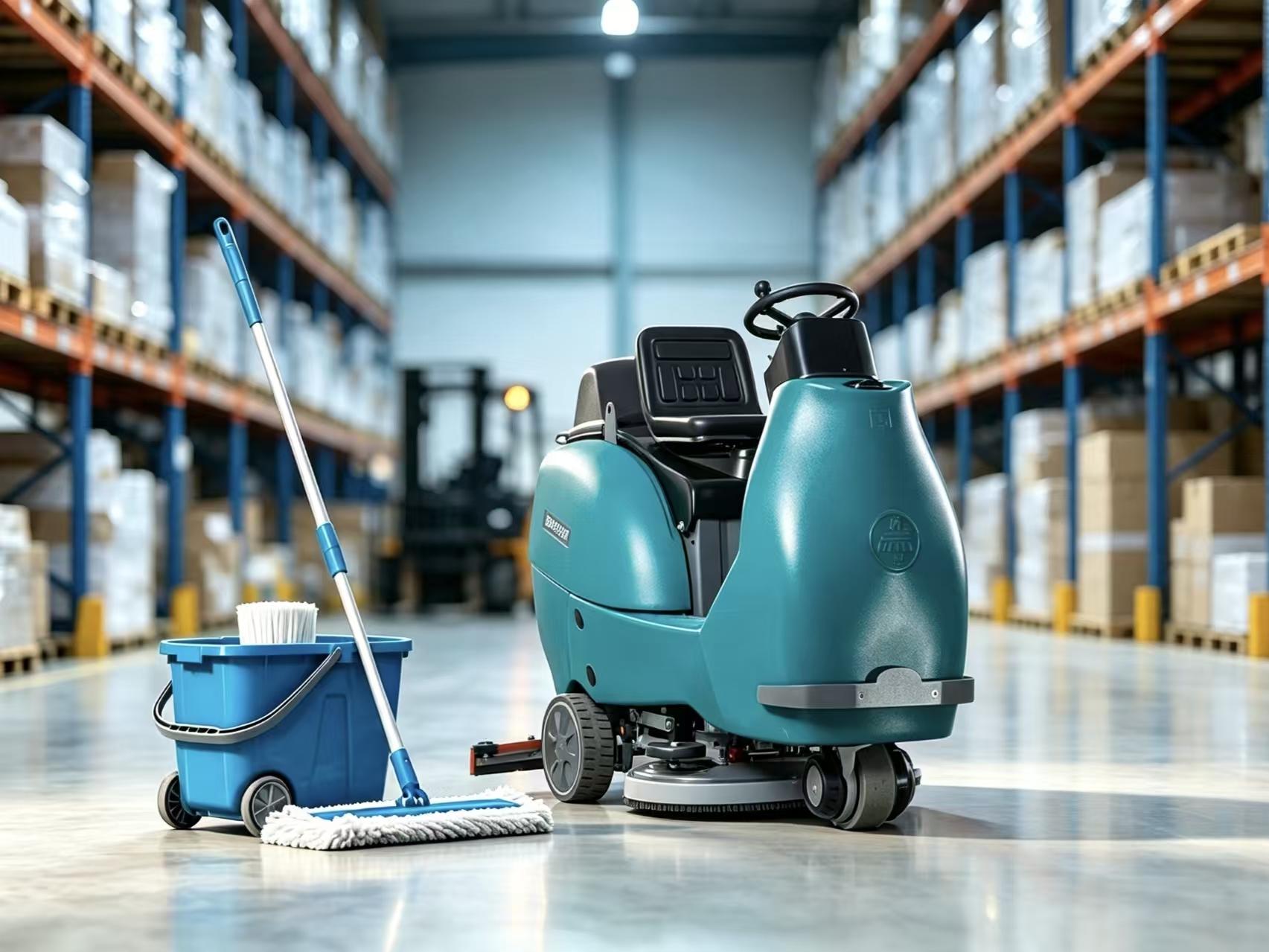
Still mopping your large-scale warehouse with regular mops? Manual cleaning is time-consuming, labor-intensive and delivers inconsistent results. Industrial floor scrubbers stand as the optimal solution for efficient modern warehouse sanitation. This article breaks down all key differences between the two cleaning methods.
- ⏱️ Speed — scrubbers clean 10–20x faster than manual mopping- 💰 Cost — payback on equipment typically within 6–18 months on labor savings- 🧼 Consistency — machines apply even pressure; manual work varies by worker- 🛡️ Safety — scrubbers dry as they clean, reducing slip hazards- 👷 Labor — reallocate staff to picking, packing, and inventory
Cleaning Speed
A worker with a mop covers 200–300㎡/hour. A walk-behind scrubber covers 1,500–2,500㎡/hour. A ride-on scrubber covers 3,000–6,000㎡/hour. For a 10,000㎡ warehouse, manual cleaning takes 30+ hours; a ride-on scrubber finishes in under 3.
Cost Comparison
Cost Factor
Manual
Industrial Scrubber
Labor (per shift)
2–3 workers
1 operator
Equipment cost
Mops & buckets
One-time investment
Consumables
Frequent replacement
Brushes, squeegees
Water usage
High, wasteful
Controlled, efficient
Payback period
—
6–18 months
Consistency & Quality
Manual mopping leaves streaks, water spots, and missed corners. Operators tire as shifts progress, so quality drops. An industrial floor scrubber applies uniform brush pressure and vacuum pickup every pass — same result at 8am and 8pm.
Safety & Drying
Wet floors from mopping cause slips and slow down forklift traffic. Scrubbers scrub, rinse, and vacuum dry in one pass. Floors are dry within minutes, so operations continue safely.
Labor Efficiency
One machine operator replaces 2–3 manual cleaners. In a labor-shortage market, that's a major advantage. The freed staff can focus on warehouse operations instead of mopping. Larger facilities can pair a walk-behind for aisles with an industrial floor cleaning machines fleet for open areas.
FAQ
Q: How long does it take to pay back an industrial floor scrubber in a warehouse?A: Most warehouses recover the investment in 6–18 months through labor savings alone, depending on floor size and shift schedule.
Q: Can a scrubber handle a warehouse with lots of pallets and racks?A: Yes. Compact walk-behind models navigate narrow aisles, while ride-on models cover open areas. Sweeper-scrubber combos handle loose debris like packing material.
Conclusion
For warehouse floors, the choice between manual cleaning and an industrial scrubber is clear: machines deliver faster, safer, more consistent results at lower long-term cost. Jiechi's range of walk-behind and ride-on scrubbers has helped 3,000+ industrial facilities and 100,000+ customers worldwide clean smarter.

 Phone: +1 2403149021
 Mail: kliu@jiechi.com



 Phone:+1 2403149021
 Email:kliu@jiechi.com


 English


