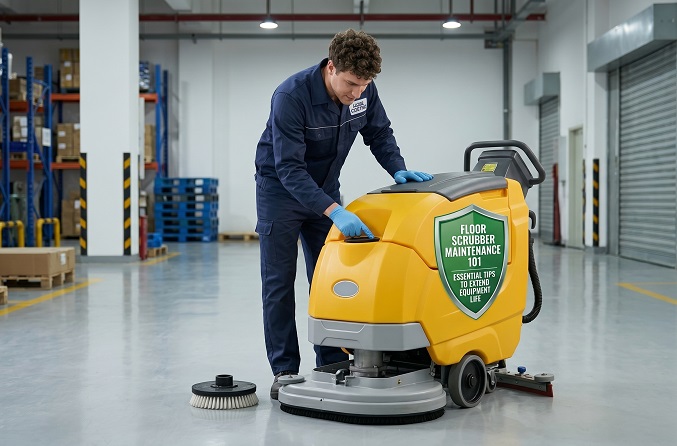
Floor Scrubber Maintenance 101: Essential Tips to Extend the Life of Your Cleaning Equipment
May 11, 2026
Why Regular Maintenance Matters for Your Floor Scrubber
A commercial floor scrubber is a significant investment. Whether you operate a walk-behind or a ride-on model, proper maintenance is the key to maximizing its lifespan, minimizing downtime, and keeping your facility's floors spotless. Neglecting routine care can lead to costly repairs, reduced cleaning performance, and premature equipment failure.
In this guide, we'll walk you through the essential floor scrubber maintenance tips every facility manager should know.
1. Clean the Squeegee Blades Daily
The squeegee is responsible for drying the floor after scrubbing. If the blades are dirty, cracked, or worn, water will be left behind — creating slip hazards and slowing down your cleaning operation.
What to do:
After each use, rinse the squeegee blades with clean water.
Remove any string, hair, or debris wrapped around the blade edges.
Inspect for nicks and wear. Rotate or replace blades as needed (every 3–6 months depending on usage).
Worn squeegee blades force you to go over the same area twice, wasting time and water.
2. Check and Clean the Brush or Pad Deck
Your floor scrubber's brushes or pad drivers do the heavy lifting — scrubbing dirt and grime off the floor. Over time, they accumulate debris, grease, and chemical residue, which reduces scrubbing efficiency.
What to do:
Remove brushes after each shift and rinse them thoroughly.
Check for uneven wear — if bristles are worn on one side, the brush may need replacement or the deck may need adjustment.
Replace brushes every 6–12 months depending on floor type and usage frequency.
Using worn or dirty brushes can also damage the floor surface. If you're unsure which brush type to use, check out our guide on floor scrubber brush types to select the right pad or disc for your specific floor.
3. Empty and Rinse the Recovery and Solution Tanks
Stagnant water and chemical residue inside the tanks can cause odors, bacterial growth, and clogged drain lines. This is one of the most overlooked yet critical routine care steps.
What to do:
Empty both the recovery and solution tanks after every use.
Rinse tanks with fresh water and wipe them down.
Leave the tank lids open to air dry — this prevents mold and mildew.
A dirty tank can lead to clogged filters and vacuum motor damage over time.
4. Inspect and Replace Vacuum Filters
The vacuum motor pulls dirty water from the floor into the recovery tank. A clogged or wet filter starves the motor of airflow, causing it to overheat and fail.
What to do:
Check the vacuum filter weekly.
Tap out loose debris and rinse foam filters with water (let them dry completely before reinstalling).
Replace paper or HEPA filters according to the manufacturer's schedule.
A clean filter not only protects the vacuum motor but also ensures better water pickup — leaving floors drier after cleaning.
5. Battery Care: The Heart of Your Machine
Whether your scrubber uses lithium or lead-acid batteries, battery maintenance is critical.
For lead-acid batteries:
Check water levels weekly. Distilled water only — never tap water.
Keep terminals clean and free of corrosion.
Equalize charge every 10–15 cycles to prevent sulfation.
For lithium batteries:
No watering needed, but avoid deep discharges.
Store at 50% charge if the machine won't be used for extended periods.
Proper battery care can double the useful life of your power source and prevent unexpected downtime during a shift.
6. Inspect Hoses and Seals for Leaks
Cracked vacuum hoses or worn seals are a common source of reduced cleaning performance. If you notice water leaking from the machine or a sudden drop in water pickup, check the hoses first.
What to do:
Visually inspect all hoses monthly.
Listen for air hissing — that indicates a vacuum leak.
Replace cracked or brittle hoses immediately.
A small crack can quickly turn into a major vacuum system failure if ignored.
7. Lubricate Moving Parts and Fasteners
Your floor scrubber has several pivot points, wheel bearings, and mechanical linkages that need periodic lubrication.
What to do:
Apply grease or machine oil to pivot points and bearings per the operator manual.
Avoid over-lubricating — excess grease attracts dust and debris.
Check the scrub head lift mechanism and steering components regularly.
Lubrication reduces wear, prevents squeaking, and keeps the machine operating smoothly.
8. Store Your Machine Properly
Where and how you store your floor scrubber matters.
What to do:
Store in a dry, temperature-controlled area.
Never leave the scrubber outdoors or in freezing conditions (water left in the system can freeze and crack hoses, pumps, and tanks).
Charge batteries after use but don't leave them on the charger indefinitely.
Proper storage is the simplest way to prevent weather-related damage and extend equipment life.
Establish a Maintenance Schedule
The key to long equipment life is consistency. Create a simple daily, weekly, and monthly checklist:
Frequency
Task
Daily
Clean squeegee, rinse tanks, check brush wear
Weekly
Inspect vacuum filter, check battery water (lead-acid), test all functions
Monthly
Inspect hoses, lubricate moving parts, check fasteners
Quarterly
Replace squeegee blades, replace brushes if needed, deep-clean tanks
Post this checklist near your charging station so operators never skip a step.
Why Choose JIECHI for Your Cleaning Equipment?
At JIECHI, we don't just manufacture commercial floor scrubbers — we stand behind them with comprehensive spare parts support and technical collaboration. With 60,000+ m² of manufacturing facilities and rigorous quality control, our machines are built to last. And when you need parts or service guidance, our team is ready to help.
Keep Your Scrubber Running Like New
A well-maintained floor scrubber doesn't just clean better — it saves you money on repairs, reduces operator frustration, and extends the life of your investment by years. Start with these basics, build a routine, and your equipment will thank you.
Have questions about maintaining your specific model? Contact us — we're happy to provide tailored advice.

 Phone: +1 2403149021
 Mail: kliu@jiechi.com



 Phone:+1 2403149021
 Email:kliu@jiechi.com


 English


