other

Floor Cleaning Machine

Home

Floor Cleaning Machine

  • Why do some floor scrubbers last ten years while others don't?
    May 21, 2026
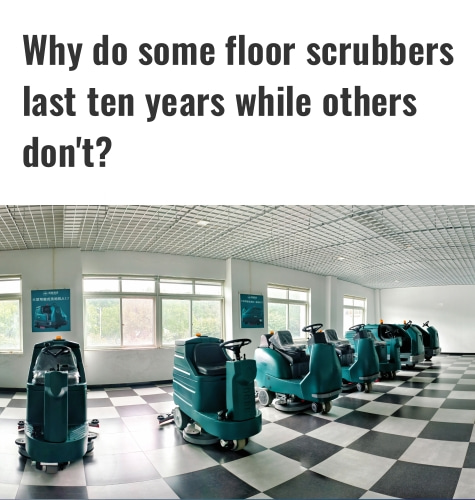
    The cleaning performance of commercial floor scrubbers is closely tied to their service life. Without regular maintenance, the machine’s components are prone to wear and tear, which not only compromises cleaning quality and operational efficiency but also significantly shortens the machine’s lifespan.   Why do some floor scrubbers last for over a decade, while others require frequent repairs or are even scrapped after just a few years? In reality, many floor scrubbers aren’t worn out through use, but rather through neglect and accumulated grime. Scientific and systematic maintenance can extend the equipment’s service life by several years, saving businesses a significant amount on repair costs.     The biggest mistake with commercial floor scrubbers is simply “storing them in the warehouse immediately after use without any further attention.” Proper daily maintenance can prevent 80% of equipment malfunctions and significantly reduce repair costs.   When filling the fresh water tank, do not fill it to the brim to prevent water from overflowing and damaging the equipment’s electrical system; When adding detergent, first fill the tank with clean water, then add the detergent. Never use cleaning products that produce excessive foam, such as laundry detergent. Additionally, you must add a defoaming agent to the waste water tank to prevent foam from being sucked into the machine and damaging the blower.   During operation, pay close attention to and record any signs of damage or abnormalities, such as water leaks or unusual noises. If you discover any issues, contact after-sales personnel immediately to address them and prevent minor faults from escalating. While the machine is in operation, do not reverse, drive over speed bumps, or operate on slopes. If you need to reverse or cross a speed bump, stop the scrubbing operation first, raise the brush deck and squeegee, and resume work only after completing the maneuver to prevent component damage.   After stopping operation, raise the brush deck and squeegee to prevent deformation from prolonged pressure. This simple step effectively extends the service life of these wear-prone parts and reduces replacement costs.   After use, thoroughly rinse the waste water tank with clean water to prevent dirt buildup and blockages, which can reduce the tank’s capacity. This is especially important during hot and humid summer months, when bacteria can easily multiply and cause odors. When cleaning the waste water tank, also check the condition of the float ball filter screen and remove it for rinsing as needed (typically once a week). Wipe down the exterior of the machine with a cloth to keep it clean.   The squeegee rubber strip is a key component for ensuring effective floor drying. We recommend wiping away dirt, sand, and hair from the surface of the strip daily with a cloth. If sand or gravel becomes lodged in the gaps of the strip, it may not seal properly, leaving noticeable water marks after mopping and affecting cleaning performance.     Daily cleaning is “prevention,” while regular maintenance is “extending the machine's lifespan.” Spend 10 minutes each week giving your floor scrubber a “deep clean” to ensure optimal cleaning performance.   Commercial floor scrubbers pick up a significant amount of debris, which can cause scale and sand to build up on the inner walls of the water hose. We recommend unclogging the Thoroughly clean out any stuck dirt and hair to ensure the water flow remains unobstructed.   Regularly inspect the battery cables for wear and check that the connectors are secure. If any issues are found, replace or tighten them promptly to ensure a stable power supply.   The squeegee rubber strips are consumables; on commercial models, all four corners of the strip are typically usable. If you notice wear on the strip, remove it, flip it to the unworn side, and reinstall it for continued use. If the wear is severe or the strip is damaged, replace it immediately to avoid affecting drying performance.     In commercial floor scrubbers, the battery and motor are the most expensive core components. Once damaged, repair costs can be exorbitant, so special care must be taken to protect them.   【Battery Maintenance】 Never allow the battery to completely discharge until the machine stops running before recharging, and do not leave the machine idle for extended periods (which can easily cause the battery to lose its charge and become unusable). Never charge the battery in direct sunlight or high temperatures to prevent overheating and safety risks. Always use the dedicated charger; do not mix chargers of different specifications.   Regularly inspect the battery condition to ensure there is no wear or damage. Whether using lead-acid or lithium batteries, before short-term storage (such as during holidays), the battery must be fully charged and disconnected from the power source. For long-term storage, thoroughly clean the interior and exterior of the machine, store it in a dry, well-ventilated area, and periodically recharge the battery to maintain its performance. Before resuming use, conduct a comprehensive inspection of the machine and confirm there are no abnormalities before putting it back into service.   【Motor Protection】If you use a foaming detergent while scrubbing the floor, or if there are foam-producing substances such as laundry detergent residue on the floor, you must add a defoaming agent to the waste water tank! Commercial water extraction motors are highly susceptible to water ingress; if foam is sucked into the motor, it can easily cause the motor to burn out.   If the float ball in the waste water tank blocks the suction inlet, the operating noise of the machine will change. In this case, check whether the waste water tank is full; if so, drain the waste water first. If debris has accumulated on the filter screen, raising the float ball and blocking the suction inlet, clean the filter screen.   Commercial floor scrubbers are essential productivity tools that help businesses save time and reduce labor costs. Only through careful maintenance can they continue to operate efficiently, ensuring the smooth running of daily business operations!

  • Walk-Behind vs Ride-On Floor Sweeper: What's the Difference in Internal Structure?
    May 21, 2026
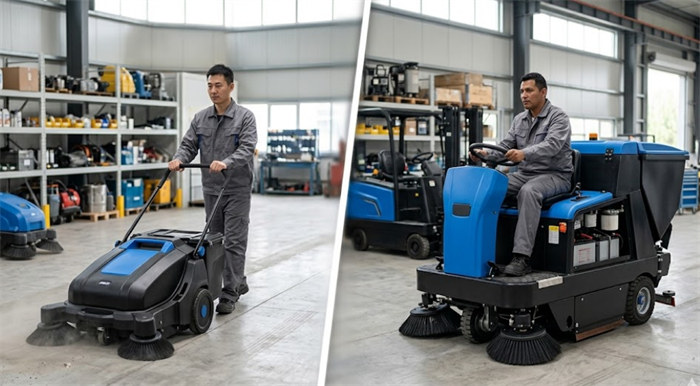
    When choosing a floor sweeper for your facility, one of the first decisions you'll make is whether to go with a walk-behind or a ride-on model. While most buyers focus on size and price, the real difference lies in the internal structure — the chassis, drivetrain, brush system, and dust filtration mechanism. Understanding how these components differ between the two types will help you make a more informed purchasing decision. At Jiechi Cleaning, we offer both walk-behind and ride-on floor sweepers designed for various facility requirements.   1. Chassis and Frame Structure The foundation of any floor sweeper is its chassis. A walk-behind floor sweeper features a compact, lightweight frame. The chassis is typically constructed from welded steel or heavy-duty plastic, designed to keep the machine narrow and maneuverable. The operator controls are mounted directly on the handle, with the engine or battery pack positioned low and centered to maintain balance. A ride-on floor sweeper, by contrast, has a much larger and heavier chassis. The frame must support not only the sweeping components but also a seat, steering wheel, foot pedals, and the operator's full body weight. The chassis is almost always fabricated from reinforced steel to handle the higher structural loads. The center of gravity is lower and wider, providing stability during high-speed sweeping and turning. 2. Drivetrain and Propulsion System The way power is delivered to the wheels differs significantly. Walk-behind sweepers typically use a direct-drive or belt-driven system connected to a small engine or electric motor. The operator walks behind the machine, controlling speed with a throttle or variable-speed trigger. Some models use a transaxle for self-propelled movement, while simpler models rely on the operator's pushing force combined with a rotating broom to pull the machine forward. Ride-on sweepers are equipped with a hydrostatic or hydro-gear transmission, similar to what you'd find in a compact utility vehicle. This allows the operator to control forward and reverse speed with foot pedals, leaving both hands free for steering. The drivetrain is more robust, often including a differential axle to handle uneven floor surfaces and heavy loads. 3. Main Brush and Side Brush Configuration Both walk-behind and ride-on sweepers use a combination of main brushes and side brushes, but the configuration and scale differ. In a walk-behind sweeper, the main brush (typically a cylindrical roller brush) is located in a fixed position beneath the machine. It rotates at high speed to sweep debris into the hopper. The side brush — usually one or two — is mounted on the front corners and sweeps debris from edges and corners toward the main brush path. The sweep width on walk-behind models usually ranges from 20 to 30 inches (50–76 cm). In a ride-on sweeper, both the main brush and side brushes are larger and more powerful. The main brush is often wider (30–50 inches / 76–127 cm) and may use a dual-brush or counter-rotating design for more aggressive debris pickup. The side brushes are hydraulically or electrically actuated and can be raised or lowered independently. Some ride-on models have two side brushes — one on each side — for full-width edge-to-edge sweeping. Check out our ride-on floor sweeper range for details on brush configurations. 4. Hopper (Debris Collection) System The hopper — where swept debris is collected — also differs in design. Walk-behind sweepers typically have a rear-mounted hopper that lifts out manually for emptying. Hopper capacity ranges from 1 to 3 cubic feet (28–85 liters). The hopper is usually made of durable polyethylene or coated steel, with a rubber seal to contain dust. Because of the compact design, the hopper on a walk-behind model may need frequent emptying during large-area cleaning. Ride-on sweepers feature a larger hopper — often 8 to 20 cubic feet (226–566 liters) or more. The hopper is integrated into the chassis and is typically hydraulically lifted for dumping into a waste bin or dumpster. This hydraulic hopper lift is a key structural difference that adds weight, complexity, and cost — but significantly reduces the labor required for emptying. 5. Dust Filtration and Vacuum System This is where the internal structure of walk-behind and ride-on sweepers diverges most dramatically. Walk-behind sweepers often use a simple filter cartridge or filter bag mounted near the hopper. A small vacuum fan pulls dust-laden air through the filter, with some models relying on the brush's centrifugal action to settle dust without a powered fan. The filter may need manual cleaning every few hours using a vibrator or compressed air. Ride-on sweepers are equipped with a multi-stage dust filtration system. A powerful vacuum fan creates negative pressure inside the hopper, pulling fine dust through a primary filter (often a pleated paper or polyester cartridge) and sometimes a secondary HEPA filter. Most ride-on models feature an automatic filter shaker — a pneumatic or electric mechanism that vibrates the filter at regular intervals, extending cleaning cycles and reducing maintenance. The larger filter surface area on ride-on models (often 30–70 sq ft / 2.8–6.5 sq m vs. 5–10 sq ft / 0.5–0.9 sq m on walk-behind models) means they can operate longer between filter cleanings and handle finer dust particles. For facilities dealing with fine dust, choosing a ride-on model with advanced filtration options is highly recommended. 6. Engine / Battery and Electrical System Walk-behind sweepers typically use small gasoline engines (3–6 HP) or single deep-cycle lead-acid batteries (12V or 24V). The electrical system is minimal — a start switch, a battery charge indicator, and simple wiring. Ride-on sweepers use larger engines (10–25 HP) or multi-battery packs (36V or 48V lithium or lead-acid). The electrical system includes a battery management system, motor controllers (if electric), instrument panel gauges, lights, a horn, and often a backup alarm. The wiring harness is significantly more complex, with relays and solenoids controlling the hydraulic valves and electric actuators. Comparison Summary Table Feature Walk-Behind Sweeper Ride-On Sweeper Chassis Lightweight, compact Reinforced steel, heavy-duty Transmission Direct-drive / belt Hydrostatic / hydro-gear Sweep width 20–30 inches 30–50 inches Hopper capacity 1–3 cu ft 8–20+ cu ft Hopper lift Manual Hydraulic Filter area 5–10 sq ft 30–70 sq ft Filter cleaning Manual Automatic shaker Power system 3–6 HP / 12–24V 10–25 HP / 36–48V Which One Should You Choose? Choose a walk-behind sweeper if you have limited space, operate in narrow aisles, or need a cost-effective solution for small to medium areas (under 50,000 sq ft). Walk-behind models are easier to transport, simpler to maintain, and require less operator training. Choose a ride-on sweeper if you cover 50,000+ sq ft daily, need higher productivity, and can invest in a more powerful machine with lower per-hour operating costs. The ride-on design allows operators to work longer shifts with less fatigue, and the larger hopper and filter system reduce downtime. Need a Floor Sweeper That Fits Your Facility? At Jiechi Cleaning, we offer a full range of walk-behind and ride-on floor sweepers designed for different facility sizes and cleaning requirements. Whether you need a compact sweeper for a small workshop or a heavy-duty ride-on model for a large warehouse, we have the right solution. Contact us today to discuss your facility's needs and get a professional recommendation.
  • Commercial Floor Scrubber Classification & Selection Tips for All Scenarios
    Apr 25, 2026
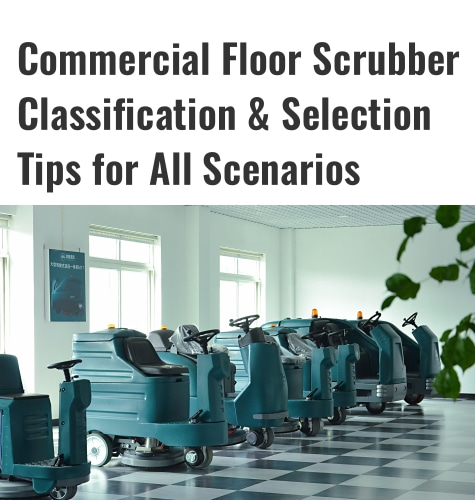
    Do procurement, property management and factory facility staff always feel overwhelmed when choosing commercial floor scrubbers?   The core criteria for classifying commercial floor scrubbers lie in site size + cleaning demands — higher price never means better performance, and perfect compatibility is the top priority.   Walk-behind Scrubber | First Choice for Small Spaces ✨ Applicable Scenarios: Small and medium areas within 5,000 square meters, including convenience stores, small workshops, office corridors, restaurant back kitchens, hospital wards and nursing home activity rooms.   ✅ Core Advantages: Compact body design to easily navigate narrow aisles and equipment gaps. User-friendly operation requires no professional training, easy for general staff to operate. Low maintenance cost and space-saving for storage.   A3 BA530BT   ✅ Procurement Tips: For limited budgets and small-area usage, prioritize models with over 6 hours of battery life and adjustable brush pressure.     Ride-on Scrubber | Main Workhorse for Medium & Large Spaces ✨ Applicable Scenarios: Medium to large areas of 5,000–20,000 square meters, such as mid-sized factories, shopping malls, underground parking lots, large warehouses and industrial parks.   A5 A7 BA850BT A17 【 More machine information 】   ✅ Core Advantages: Hands-free cleaning with ride-on design, doubling working efficiency (4,000–9,200 sq.m/h). Equipped with 6+ hours long battery life and adjustable brush pressure (20–90kg), capable of handling light, moderate and heavy oil stains. Sewage recovery rate ≥95%, ensuring quick-dry non-slip floors.   ⚠ Notes: Larger body requires dedicated storage space. Higher cost than walk-behind models, ideal for large-area cleaning with sufficient budgets. For workshops with dense equipment, select models with flexible steering.   Intelligent Unmanned Scrubber | Optimal for Large & High-end Venues ✨ Applicable Scenarios: Large venues above 20,000 square meters, including logistics parks, large industrial zones, airports, high-speed railway stations, lithium battery dust-free workshops and hypermarkets. ✅ Core Advantages: 24-hour unattended operation and compatible with intelligent management systems, perfect for continuous large-area cleaning. AI automatically identifies dirt types and adjusts cleaning modes; precise navigation and intelligent obstacle avoidance greatly cut labor costs. Meets high-standard demands for dust-free and sterile environments.   ⚠ Notes: High initial investment and regular debugging & maintenance required. Recommended to cooperate with walk-behind scrubbers for supplementary local cleaning.   For large factories and high-end dust-free workshops, choose brands with nationwide after-sales networks and fast response services, to prevent project delays caused by equipment malfunctions.

leave a message

leave a message
If you are interested in our products and want to know more details,please leave a message here,we will reply you as soon as we can.
submit

Home

Products

WhatsApp

contact