other

industrial floor sweeper

Home

industrial floor sweeper

  • Standalone vs. Combination Machine: Are All-in-One Sweeper-Scrubbers Worth the Investment?
    May 25, 2026
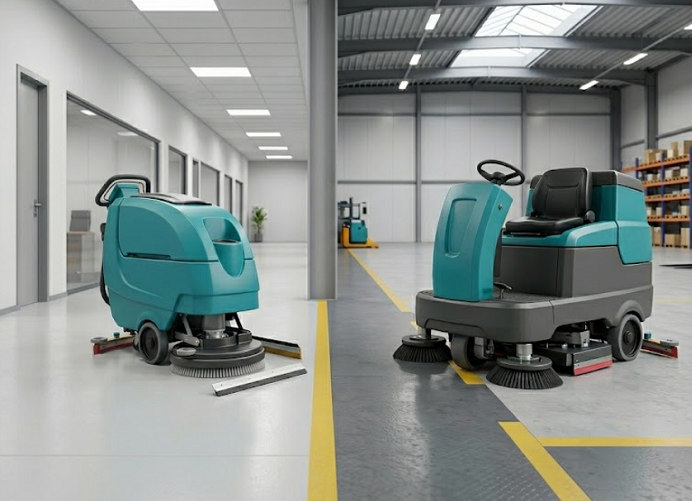
    When facility managers evaluate floor cleaning equipment, one of the biggest decisions is whether to purchase standalone machines (a separate sweeper and scrubber) or invest in an all-in-one combination machine that sweeps and scrubs in a single pass. Each approach has its merits, and the right choice depends on your facility's size, floor conditions, debris types, and budget. This article breaks down the key differences between standalone and combination machines, helping you determine which configuration delivers the best return on investment for your operation. What Is a Standalone System? A standalone cleaning system means using two separate machines: a floor sweeper for dry debris collection, followed by a floor scrubber for wet washing and drying. This traditional approach has been the industry standard for decades and remains a popular choice for many facilities. Pros of Standalone Machines: Higher specialization: Each machine is optimized for its specific task — sweepers have larger hoppers and stronger vacuum for dry debris, while scrubbers focus on water pressure, brush contact, and drying performance Redundancy: If one machine breaks down, you still have the other operational Scalability: You can upgrade each machine independently as needs change Lower per-machine cost: Standalone units are typically less expensive than a single combination machine of comparable capacity Cons of Standalone Machines: Two-pass cleaning: Requires sweeping first, then scrubbing — doubling labor time More storage space: Two machines take up more floor area when parked Higher total maintenance: Two engines, two battery systems, two sets of wear parts More training: Operators must learn two different machines What Is a Combination Machine? A combination sweeper-scrubber (also known as an all-in-one or 2-in-1 machine) performs both sweeping and scrubbing in a single pass. It features a front-mounted sweeping mechanism that collects dry debris into an integrated hopper, while the rear scrub deck simultaneously washes and dries the floor — all in one operation. Pros of Combination Machines: Single-pass efficiency: Eliminates the pre-sweep step, cutting cleaning time by 30–50% Labor savings: One operator can complete what previously required two passes Compact footprint: One machine replaces two, saving valuable storage space Lower long-term labor costs: Fewer man-hours per cleaning cycle Simplified training: Operators only need to learn one machine Cons of Combination Machines: Higher upfront cost: A single combination machine often costs more than a standalone sweeper Single point of failure: If the machine goes down, both sweeping and scrubbing are affected Limited hopper capacity: The debris hopper on combination machines is typically smaller than a dedicated sweeper's hopper Heavier weight: Combination machines carry more components, which can be a concern on weight-sensitive floors or upper levels Head-to-Head Comparison: Which Performs Better? When comparing cleaning speed, a standalone setup requires approximately 45 minutes per 1,000 m² (sweep then scrub), while a combination machine completes the same area in 20–25 minutes in a single pass. Standalone setups typically need 1–2 operators and two machine bays for storage, whereas a combination machine requires only one operator and one bay. On total cost of ownership over three years, standalone systems tend to have higher labor costs and double the maintenance overhead, while combination machines deliver lower labor costs and single-machine maintenance. When Should You Choose Standalone Machines? Standalone setups are still the better choice in these scenarios: Heavy debris environments: Facilities with large volumes of bulky debris (wood chips, packaging materials, metal scraps) benefit from dedicated sweepers with larger hoppers Extremely large facilities: Warehouses over 10,000 m² may benefit from having specialized high-capacity sweepers and scrubbers working in parallel Budget constraints: If you already own one machine, adding the other is more affordable than buying a combination unit Sensitive floor coatings: Very thin epoxy or coating systems may benefit from the lighter weight of smaller standalone machines When Should You Invest in a Combination Machine? Combination sweepers and scrubbers deliver the best value in these situations: Mixed debris facilities: Workshops, manufacturing plants, and auto garages where dry debris and wet dirt co-exist Labor-intensive environments: Facilities looking to reduce cleaning labor costs and headcount Space-constrained operations: Buildings with limited storage or narrow corridors where two machines cannot easily pass Multi-shift cleaning: Operations that clean between production shifts and need maximum speed Food processing and light industrial: Areas with moderate debris levels where single-pass cleaning keeps production downtime to a minimum JIECHI's All-in-One Solutions At JIECHI, we offer a full range of combination machines designed for different facility sizes and debris loads: M12 Compact Walk-Behind Combination Machine — Ideal for small workshops and tight spaces, with a 530mm cleaning width and 15L debris hopper M16 Mid-Size Walk-Behind Combination Machine — Perfect for medium facilities, featuring dual brush system with 860mm cleaning width and 20L hopper M20 Small Ride-On Combination Machine — Designed for large warehouses and logistics centers, offering 900mm cleaning width and 5500 m²/h productivity For facilities that prefer standalone machines, JIECHI's complete lineup of commercial floor scrubbers and industrial floor sweepers provides reliable, specialized cleaning power for any application. Final Verdict: Are All-in-One Sweeper-Scrubbers Worth It? For most medium-sized industrial and commercial facilities, the answer is yes — combination machines deliver a compelling return on investment through labor savings, reduced cleaning time, and simplified operations. The higher upfront cost is typically recovered within 12–18 months through reduced labor expenses. However, facilities with very heavy debris loads or extremely large floor areas may still benefit from the specialization and redundancy of separate machines. Evaluate your specific debris types, floor size, and labor costs to make the right decision. Need help choosing between standalone and combination machines for your facility? Contact JIECHI's cleaning experts today for a free consultation and equipment recommendation.
  • Best Floor Cleaning Machines for Epoxy and Concrete Warehouse Floors
    May 22, 2026
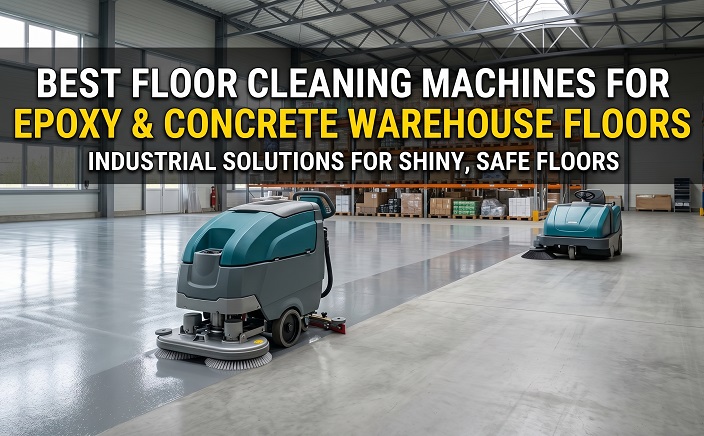
    Choosing the right floor cleaning machine for your warehouse depends heavily on the type of flooring you have. Two of the most common industrial flooring surfaces — epoxy and bare concrete — have very different cleaning requirements, and using the wrong equipment can damage the floor or leave it inadequately cleaned. In this guide, we'll break down the best floor cleaning machines for warehouse floors, so you can make the right investment for your facility. Epoxy vs. Concrete Floors: Key Differences for Cleaning Before selecting a cleaning machine, it helps to understand how these two surfaces differ: Epoxy floors are seamless, non-porous, and highly resistant to chemicals and moisture. They provide a smooth, glossy finish that is easy to clean but also more sensitive to abrasion. Aggressive brush bristles or harsh pad materials can scratch, dull, or even peel epoxy coatings over time. Bare concrete floors are porous, textured, and significantly more abrasive to cleaning equipment. They absorb oils and stains, require more aggressive scrubbing action, and produce more wear on brushes and squeegee blades. These differences matter when selecting both the type of machine and the specific attachments or brushes. Best Machines for Epoxy Warehouse Floors Epoxy floors are best maintained with gentle, consistent cleaning that preserves the coating. The following machines are ideal: 1. Walk-Behind Floor Scrubbers with Soft Brushes A walk-behind floor scrubber equipped with soft nylon or polypropylene brushes (or white/red pad drivers) is the safest and most effective choice for epoxy floors. These machines apply water and cleaning solution, scrub gently, and vacuum up the dirty water in one pass — leaving the epoxy surface clean, dry, and undamaged. Recommended features for epoxy floors: Adjustable brush pressure (lower pressure settings to avoid scratching) Soft brushes or non-abrasive pad drivers Squeegee with soft rubber blades for streak-free drying Solution flow control to avoid pooling water 2. Auto Scrubbers with Pad Drivers For larger epoxy warehouse floors, a ride-on auto scrubber for concrete floors with pad drivers offers higher productivity. Use white polishing pads for daily cleaning and red pads for deeper cleaning when needed. Avoid black or green abrasive pads — they are designed for stripping and will damage epoxy. 3. Floor Sweepers (for Dry Debris Only) If your epoxy floor primarily accumulates dry debris (dust, cardboard particles, packaging), a walk-behind or ride-on floor sweeper is the best choice. Sweepers collect dry debris without water, preventing moisture from seeping into any minor cracks or edges in the epoxy coating. Jiechi's BA series ride-on sweepers, such as the BA1200 and BA1400, are excellent options for large epoxy warehouse floors. Best Machines for Concrete Warehouse Floors Bare concrete floors can handle more aggressive cleaning, but they also need machines capable of dealing with embedded dirt, oil stains, and a rougher surface texture. 1. Heavy-Duty Ride-On Floor Scrubbers For large concrete warehouse floors, a heavy-duty ride-on floor scrubber with aggressive brush action is the most efficient solution. Look for machines with: High brush down-pressure (100+ kg) to scrub ingrained dirt Hard-bristle brushes (blue, green, or black depending on soil level) Large solution and recovery tanks (100+ liters) for extended runtime Durable squeegee blades that can handle rough concrete surfaces Jiechi's ride-on floor scrubber models are built for exactly this application. They feature powerful brush motors, robust drivetrains, and high-capacity tanks to keep your concrete floors clean across long shifts. 2. Combination Scrubber-Sweepers for Concrete Floors Concrete floors in warehouses often have both dry debris (dust, gravel, packaging) and wet/sticky soil (oil drips, tire marks). A combination scrubber-sweeper — like Jiechi's M series combi machines — can sweep dry debris and scrub the floor in a single pass. This is especially valuable in warehouses where sweeping and scrubbing are both needed daily. 3. Industrial Floor Sweepers with High Filtration For concrete warehouses where the primary concern is dust control — such as those handling cement, grain, or powdery materials — a high-filtration industrial floor sweeper with a durable filtration system for floor scrubbers is the right choice. Fully enclosed ride-on sweepers with powerful vacuum systems and large filter areas capture fine dust without spreading it into the air. Brush and Pad Selection Guide This quick reference helps you select the right brushes for each floor type: Epoxy floors → Soft nylon brushes or white/red pad drivers. Avoid abrasive pads. Polished concrete → Soft brushes and white pads to maintain the polished finish. Bare concrete (smooth) → Medium polypropylene brushes or blue pads. Bare concrete (rough/textured) → Hard bristle brushes or green pads for heavy scrubbing. Oil-stained concrete → Black stripping pads (use only in targeted areas, not full-floor). Common Mistakes to Avoid Using aggressive brushes on epoxy floors. Even one pass with a black stripping pad or hard bristle brush can scratch and dull an epoxy coating, requiring costly refinishing. Using too much water on concrete floors. Concrete is porous. Excess water can soak in, leading to moisture problems, mildew, and even structural issues over time. Use a scrubber with proper squeegee pick-up and limit solution flow. Neglecting daily sweeping before scrubbing. On both epoxy and concrete floors, sweeping first removes abrasive debris that can scratch the surface during scrubbing. Always sweep before you scrub for best results. Skipping routine squeegee and brush maintenance. A worn squeegee on concrete leaves streaks; a worn brush on epoxy causes uneven cleaning. Follow proper warehouse floor cleaning equipment maintenance practices to keep both your machine and your floor in top condition. Inspect both regularly and replace as needed. Why Choose Jiechi for Your Warehouse Floor Cleaning Needs At Jiechi Cleaning, we manufacture a full range of floor cleaning machines designed for both epoxy and concrete warehouse floors. Whether you need a gentle walk-behind scrubber for a delicate epoxy showroom floor or a heavy-duty ride-on sweeper for a rough concrete distribution center, we have the right solution. Our factory, spanning over 60,000 m² in Shanghai and Jiangxi, covers everything from R&D and design to production and testing. Every machine is built under direct quality control, ensuring consistent performance and long service life. For B2B partners, we also offer OEM customization, spare parts support, and technical collaboration. Not Sure Which Machine Is Right for Your Floor? Choosing the wrong cleaning equipment can damage your floor and waste your budget. Contact Jiechi today and our engineering team will help you evaluate your floor type, debris load, and cleaning frequency — and recommend the ideal machine for your facility.

  • Walk-Behind vs Ride-On Floor Sweeper: What's the Difference in Internal Structure?
    May 21, 2026
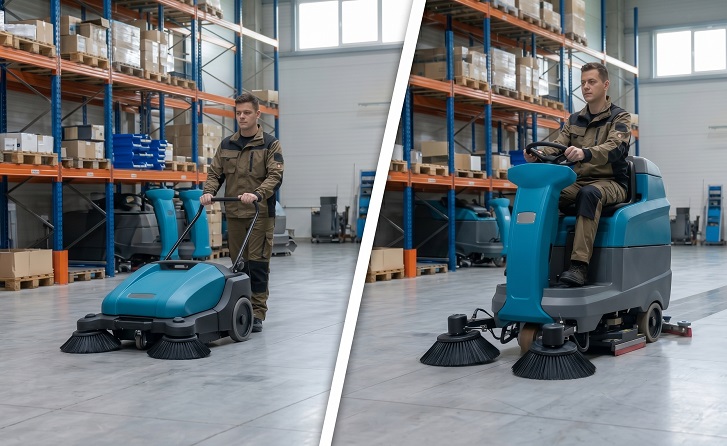
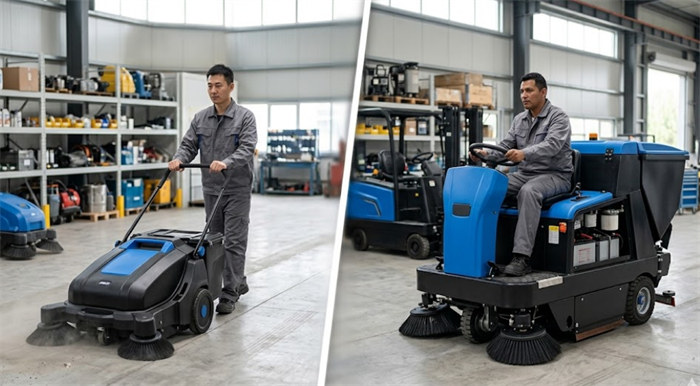
    When choosing a floor sweeper for your facility, one of the first decisions you'll make is whether to go with a walk-behind or a ride-on model. While most buyers focus on size and price, the real difference lies in the internal structure — the chassis, drivetrain, brush system, and dust filtration mechanism. Understanding how these components differ between the two types will help you make a more informed purchasing decision. At Jiechi Cleaning, we offer both walk-behind and ride-on floor sweepers designed for various facility requirements.   1. Chassis and Frame Structure The foundation of any floor sweeper is its chassis. A walk-behind floor sweeper features a compact, lightweight frame. The chassis is typically constructed from welded steel or heavy-duty plastic, designed to keep the machine narrow and maneuverable. The operator controls are mounted directly on the handle, with the engine or battery pack positioned low and centered to maintain balance. A ride-on floor sweeper, by contrast, has a much larger and heavier chassis. The frame must support not only the sweeping components but also a seat, steering wheel, foot pedals, and the operator's full body weight. The chassis is almost always fabricated from reinforced steel to handle the higher structural loads. The center of gravity is lower and wider, providing stability during high-speed sweeping and turning. 2. Drivetrain and Propulsion System The way power is delivered to the wheels differs significantly. Walk-behind sweepers typically use a direct-drive or belt-driven system connected to a small engine or electric motor. The operator walks behind the machine, controlling speed with a throttle or variable-speed trigger. Some models use a transaxle for self-propelled movement, while simpler models rely on the operator's pushing force combined with a rotating broom to pull the machine forward. Ride-on sweepers are equipped with a hydrostatic or hydro-gear transmission, similar to what you'd find in a compact utility vehicle. This allows the operator to control forward and reverse speed with foot pedals, leaving both hands free for steering. The drivetrain is more robust, often including a differential axle to handle uneven floor surfaces and heavy loads. 3. Main Brush and Side Brush Configuration Both walk-behind and ride-on sweepers use a combination of main brushes and side brushes, but the configuration and scale differ. In a walk-behind sweeper, the main brush (typically a cylindrical roller brush) is located in a fixed position beneath the machine. It rotates at high speed to sweep debris into the hopper. The side brush — usually one or two — is mounted on the front corners and sweeps debris from edges and corners toward the main brush path. The sweep width on walk-behind models usually ranges from 20 to 30 inches (50–76 cm). In a ride-on sweeper, both the main brush and side brushes are larger and more powerful. The main brush is often wider (30–50 inches / 76–127 cm) and may use a dual-brush or counter-rotating design for more aggressive debris pickup. The side brushes are hydraulically or electrically actuated and can be raised or lowered independently. Some ride-on models have two side brushes — one on each side — for full-width edge-to-edge sweeping. Check out our ride-on floor sweeper range for details on brush configurations. 4. Hopper (Debris Collection) System The hopper — where swept debris is collected — also differs in design. Walk-behind sweepers typically have a rear-mounted hopper that lifts out manually for emptying. Hopper capacity ranges from 1 to 3 cubic feet (28–85 liters). The hopper is usually made of durable polyethylene or coated steel, with a rubber seal to contain dust. Because of the compact design, the hopper on a walk-behind model may need frequent emptying during large-area cleaning. Ride-on sweepers feature a larger hopper — often 8 to 20 cubic feet (226–566 liters) or more. The hopper is integrated into the chassis and is typically hydraulically lifted for dumping into a waste bin or dumpster. This hydraulic hopper lift is a key structural difference that adds weight, complexity, and cost — but significantly reduces the labor required for emptying. 5. Dust Filtration and Vacuum System This is where the internal structure of walk-behind and ride-on sweepers diverges most dramatically. Walk-behind sweepers often use a simple filter cartridge or filter bag mounted near the hopper. A small vacuum fan pulls dust-laden air through the filter, with some models relying on the brush's centrifugal action to settle dust without a powered fan. The filter may need manual cleaning every few hours using a vibrator or compressed air. Ride-on sweepers are equipped with a multi-stage dust filtration system. A powerful vacuum fan creates negative pressure inside the hopper, pulling fine dust through a primary filter (often a pleated paper or polyester cartridge) and sometimes a secondary HEPA filter. Most ride-on models feature an automatic filter shaker — a pneumatic or electric mechanism that vibrates the filter at regular intervals, extending cleaning cycles and reducing maintenance. The larger filter surface area on ride-on models (often 30–70 sq ft / 2.8–6.5 sq m vs. 5–10 sq ft / 0.5–0.9 sq m on walk-behind models) means they can operate longer between filter cleanings and handle finer dust particles. For facilities dealing with fine dust, choosing a ride-on model with advanced filtration options is highly recommended. 6. Engine / Battery and Electrical System Walk-behind sweepers typically use small gasoline engines (3–6 HP) or single deep-cycle lead-acid batteries (12V or 24V). The electrical system is minimal — a start switch, a battery charge indicator, and simple wiring. Ride-on sweepers use larger engines (10–25 HP) or multi-battery packs (36V or 48V lithium or lead-acid). The electrical system includes a battery management system, motor controllers (if electric), instrument panel gauges, lights, a horn, and often a backup alarm. The wiring harness is significantly more complex, with relays and solenoids controlling the hydraulic valves and electric actuators. Comparison Summary Table Feature Walk-Behind Sweeper Ride-On Sweeper Chassis Lightweight, compact Reinforced steel, heavy-duty Transmission Direct-drive / belt Hydrostatic / hydro-gear Sweep width 20–30 inches 30–50 inches Hopper capacity 1–3 cu ft 8–20+ cu ft Hopper lift Manual Hydraulic Filter area 5–10 sq ft 30–70 sq ft Filter cleaning Manual Automatic shaker Power system 3–6 HP / 12–24V 10–25 HP / 36–48V Which One Should You Choose? Choose a walk-behind sweeper if you have limited space, operate in narrow aisles, or need a cost-effective solution for small to medium areas (under 50,000 sq ft). Walk-behind models are easier to transport, simpler to maintain, and require less operator training. Choose a ride-on sweeper if you cover 50,000+ sq ft daily, need higher productivity, and can invest in a more powerful machine with lower per-hour operating costs. The ride-on design allows operators to work longer shifts with less fatigue, and the larger hopper and filter system reduce downtime. Need a Floor Sweeper That Fits Your Facility? At Jiechi Cleaning, we offer a full range of walk-behind and ride-on floor sweepers designed for different facility sizes and cleaning requirements. Whether you need a compact sweeper for a small workshop or a heavy-duty ride-on model for a large warehouse, we have the right solution. Contact us today to discuss your facility's needs and get a professional recommendation.
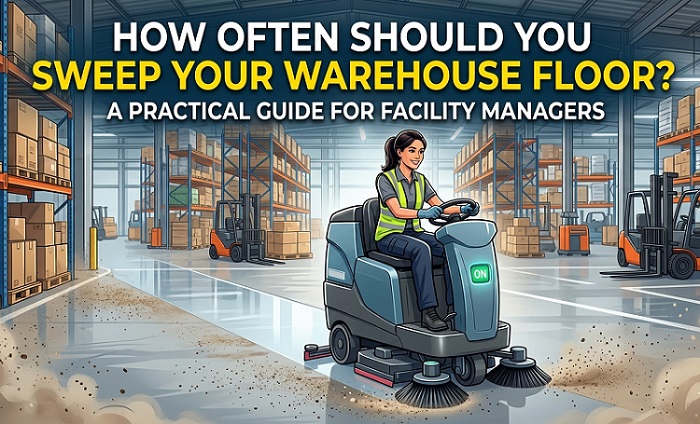
  • How Often Should You Sweep Your Warehouse Floor? A Practical Guide for Facility Managers
    May 20, 2026
    Keeping a warehouse floor clean is about more than appearances — it directly impacts workplace safety, equipment longevity, and operational efficiency. But how often should you actually run a floor sweeper through your facility? The answer isn't one-size-fits-all. It depends on traffic volume, the type of debris your operation generates, and industry-specific requirements.   Why Regular Sweeping Matters Before diving into frequency, it's worth understanding why consistent sweeping is so important. A clean warehouse floor: Reduces slip and fall risks — Dust, debris, and loose particles create hidden hazards that can cause accidents. Protects equipment — Forklifts, pallet jacks, and other machinery operate less efficiently on dirty floors. Debris can damage tires, clog air filters, and accelerate wear on moving parts. Improves air quality — Fine dust particles that accumulate on floors become airborne when disturbed by traffic. Regular sweeping with a quality industrial floor sweeper equipped with a proper filtration system keeps dust levels under control. Extends floor life — Abrasive debris like gravel, metal shavings, and sand acts like sandpaper under foot and vehicle traffic, gradually wearing down floor coatings and concrete surfaces. Enhances professionalism — Clean facilities make a positive impression on clients, inspectors, and employees alike.   Sweeping Frequency by Facility Type Different types of warehouses have very different cleaning needs. Here's a practical breakdown: High-Traffic Distribution Centers (30,000+ sq ft) These facilities see constant forklift and foot traffic, with debris arriving daily via incoming shipments and outgoing orders. Sweeping should occur at least once per day, and in busier operations, twice daily — once mid-morning and once after the final shift. A ride-on floor sweeper is the most efficient choice here, as it can cover large areas quickly without taking operators away from other tasks for too long. Manufacturing and Production Facilities Workshops that generate metal shavings, wood dust, plastic pellets, or packaging waste need more frequent cleaning. Sweep at least 2–3 times per day, particularly around production lines and loading areas. Heavy debris should be cleaned up immediately to prevent it from being crushed into the floor by machinery. Light Commercial Warehouses (under 20,000 sq ft) Smaller facilities with lower traffic volumes can typically get by with sweeping every 2–3 days. A walk-behind floor sweeper is well-suited for this application, offering good results without the higher cost of a ride-on machine. Cold Storage and Food-Grade Facilities These environments have stricter hygiene requirements. Daily sweeping is mandatory, and many operators choose to sweep after each shift to prevent buildup of food particles that can attract pests. Look for a sweeper with a HEPA filtration system to capture fine dust without spreading contaminants. Outdoor Areas and Loading Docks Loading docks, parking lots, and exterior walkways collect leaves, gravel, and windblown debris. Sweep these areas 2–3 times per week, or more frequently if your location experiences seasonal debris like falling leaves or road salt in winter. Signs You Need to Sweep More Often No matter what schedule you set, pay attention to these warning signs that your current frequency isn't enough: Visible dust buildup on surfaces within hours of cleaning Employees tracking debris from one zone to another Complaints about slippery or dusty floors Frequent maintenance issues with forklifts or other equipment Poor results from indoor air quality monitoring If you notice any of these, increase your sweeping frequency — and consider whether your current floor sweeper is the right model for your debris load. Choosing the Right Floor Sweeper for Your Schedule Your sweeping frequency is only half the equation — your equipment needs to keep up. Here are a few tips: For daily or twice-daily sweeping in large facilities → Invest in a high-capacity ride-on sweeper with a large hopper. You'll minimize trips to empty debris and maximize cleaning time. For every-other-day sweeping in smaller spaces → A compact walk-behind sweeper offers flexibility and lower operating costs. For facilities with fine dust concerns → Choose a sweeper with advanced filtration, such as a dust control system or HEPA filter. Why Jiechi Floor Sweepers Are Built for the Job At Jiechi Cleaning, we design our floor sweepers for real-world industrial and commercial conditions. Whether you need a rugged ride-on model for a busy distribution center or a nimble walk-behind sweeper for a workshop, our machines deliver consistent performance shift after shift. Every Jiechi sweeper features: Efficient sweeping systems that handle everything from fine dust to bulky debris Reliable filtration to keep airborne particles under control Durable construction built to withstand daily use in demanding environments Easy maintenance with readily available spare parts Not Sure What Sweeping Frequency Is Right for You? Every facility is different, and the right schedule depends on your specific operations. Contact Jiechi today and our team can help you evaluate your cleaning needs — and recommend the right floor sweeper and maintenance routine to keep your warehouse safe, clean, and productive.
  • Walk-Behind vs Ride-On Floor Scrubber: Which One Is Right for Your Facility?
    Apr 29, 2026
    When outfitting a professional cleaning operation, one question comes up again and again: walk-behind or ride-on floor scrubber? The answer isn't one-size-fits-all — it depends on your facility size, layout, and daily traffic. Let's break down the key differences so you can make an informed decision. Walk-Behind Scrubbers: Best for Tight Spaces A walk-behind floor scrubber like the Jiechi A3 is ideal for smaller to mid-sized areas. With a 530mm cleaning width and a compact turning radius, it can easily navigate narrow aisles, retail floors, and congested corridors. It offers excellent maneuverability, intuitive touch-panel controls, and hassle-free maintenance — all at a lower upfront cost. For facilities under 2,000m², a walk-behind model is often the most cost-effective commercial cleaning equipment choice. Ride-On Scrubbers: Built for Large-Scale Productivity When your facility spans thousands of square meters, a ride-on floor scrubber becomes essential. The Jiechi A8/A10 dual-brush ride-on model delivers a cleaning performance of up to 8,600m²/h, paired with a massive 280L solution tank and 300L recovery tank. The dual brush system powers through stubborn grease and grime in warehouses, factories, and logistics hubs. Operators can work longer without fatigue, significantly reducing labor costs in industrial cleaning. Key Maintenance Tips for Longevity No matter which type of commercial cleaning equipment you choose, proper upkeep is critical. Always rinse the recovery tank after each shift to prevent odor. Inspect squeegee blades and brush discs weekly — worn parts reduce cleaning efficiency. For ride-on models, check battery water levels monthly to extend floor scrubber battery life. Following these practices keeps your machine running at peak performance for years. Choose Jiechi — Your Trusted Floor Cleaning Partner Still unsure which type fits your operation? At Jiechi Cleaning, we specialize in manufacturing high-performance floor scrubbers, sweepers, and cleaning robots with factory-direct pricing and full OEM/ODM support. Whether you need a compact walk-behind model for retail spaces or a heavy-duty ride-on for industrial warehouses, we have the right solution for you. For larger debris-prone areas, consider pairing with an industrial floor sweeper as a pre-clean step. Browse our full range of floor scrubbers to find the perfect match. Contact us today — our team is ready to help you choose the right cleaning equipment for your facility!

leave a message

leave a message
If you are interested in our products and want to know more details,please leave a message here,we will reply you as soon as we can.
submit

Home

Products

WhatsApp

contact