other

Blogs

Home

Blogs

  • Walk-Behind vs Ride-On Floor Sweeper: What's the Difference in Internal Structure?
    May 21, 2026
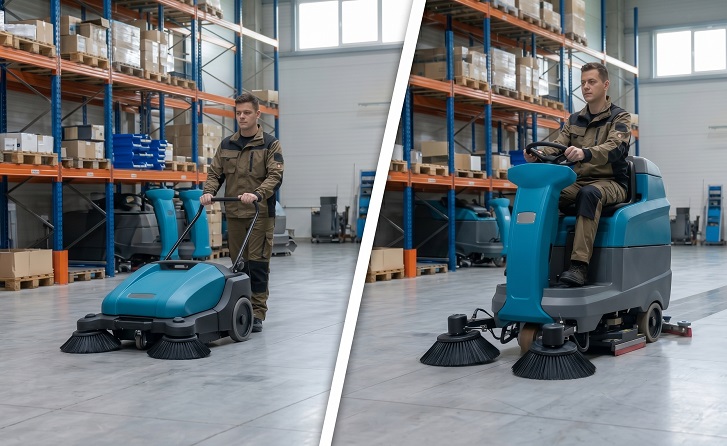
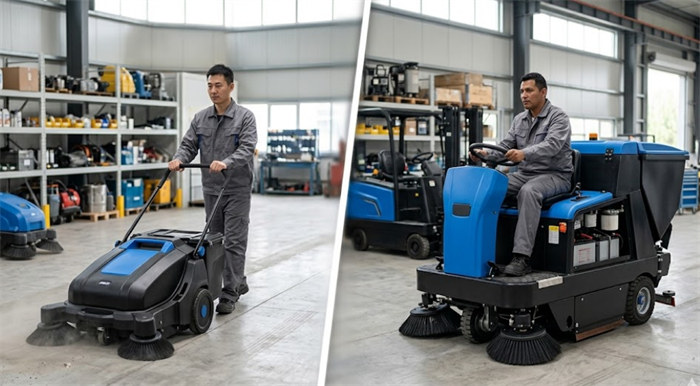
    When choosing a floor sweeper for your facility, one of the first decisions you'll make is whether to go with a walk-behind or a ride-on model. While most buyers focus on size and price, the real difference lies in the internal structure — the chassis, drivetrain, brush system, and dust filtration mechanism. Understanding how these components differ between the two types will help you make a more informed purchasing decision. At Jiechi Cleaning, we offer both walk-behind and ride-on floor sweepers designed for various facility requirements.   1. Chassis and Frame Structure The foundation of any floor sweeper is its chassis. A walk-behind floor sweeper features a compact, lightweight frame. The chassis is typically constructed from welded steel or heavy-duty plastic, designed to keep the machine narrow and maneuverable. The operator controls are mounted directly on the handle, with the engine or battery pack positioned low and centered to maintain balance. A ride-on floor sweeper, by contrast, has a much larger and heavier chassis. The frame must support not only the sweeping components but also a seat, steering wheel, foot pedals, and the operator's full body weight. The chassis is almost always fabricated from reinforced steel to handle the higher structural loads. The center of gravity is lower and wider, providing stability during high-speed sweeping and turning. 2. Drivetrain and Propulsion System The way power is delivered to the wheels differs significantly. Walk-behind sweepers typically use a direct-drive or belt-driven system connected to a small engine or electric motor. The operator walks behind the machine, controlling speed with a throttle or variable-speed trigger. Some models use a transaxle for self-propelled movement, while simpler models rely on the operator's pushing force combined with a rotating broom to pull the machine forward. Ride-on sweepers are equipped with a hydrostatic or hydro-gear transmission, similar to what you'd find in a compact utility vehicle. This allows the operator to control forward and reverse speed with foot pedals, leaving both hands free for steering. The drivetrain is more robust, often including a differential axle to handle uneven floor surfaces and heavy loads. 3. Main Brush and Side Brush Configuration Both walk-behind and ride-on sweepers use a combination of main brushes and side brushes, but the configuration and scale differ. In a walk-behind sweeper, the main brush (typically a cylindrical roller brush) is located in a fixed position beneath the machine. It rotates at high speed to sweep debris into the hopper. The side brush — usually one or two — is mounted on the front corners and sweeps debris from edges and corners toward the main brush path. The sweep width on walk-behind models usually ranges from 20 to 30 inches (50–76 cm). In a ride-on sweeper, both the main brush and side brushes are larger and more powerful. The main brush is often wider (30–50 inches / 76–127 cm) and may use a dual-brush or counter-rotating design for more aggressive debris pickup. The side brushes are hydraulically or electrically actuated and can be raised or lowered independently. Some ride-on models have two side brushes — one on each side — for full-width edge-to-edge sweeping. Check out our ride-on floor sweeper range for details on brush configurations. 4. Hopper (Debris Collection) System The hopper — where swept debris is collected — also differs in design. Walk-behind sweepers typically have a rear-mounted hopper that lifts out manually for emptying. Hopper capacity ranges from 1 to 3 cubic feet (28–85 liters). The hopper is usually made of durable polyethylene or coated steel, with a rubber seal to contain dust. Because of the compact design, the hopper on a walk-behind model may need frequent emptying during large-area cleaning. Ride-on sweepers feature a larger hopper — often 8 to 20 cubic feet (226–566 liters) or more. The hopper is integrated into the chassis and is typically hydraulically lifted for dumping into a waste bin or dumpster. This hydraulic hopper lift is a key structural difference that adds weight, complexity, and cost — but significantly reduces the labor required for emptying. 5. Dust Filtration and Vacuum System This is where the internal structure of walk-behind and ride-on sweepers diverges most dramatically. Walk-behind sweepers often use a simple filter cartridge or filter bag mounted near the hopper. A small vacuum fan pulls dust-laden air through the filter, with some models relying on the brush's centrifugal action to settle dust without a powered fan. The filter may need manual cleaning every few hours using a vibrator or compressed air. Ride-on sweepers are equipped with a multi-stage dust filtration system. A powerful vacuum fan creates negative pressure inside the hopper, pulling fine dust through a primary filter (often a pleated paper or polyester cartridge) and sometimes a secondary HEPA filter. Most ride-on models feature an automatic filter shaker — a pneumatic or electric mechanism that vibrates the filter at regular intervals, extending cleaning cycles and reducing maintenance. The larger filter surface area on ride-on models (often 30–70 sq ft / 2.8–6.5 sq m vs. 5–10 sq ft / 0.5–0.9 sq m on walk-behind models) means they can operate longer between filter cleanings and handle finer dust particles. For facilities dealing with fine dust, choosing a ride-on model with advanced filtration options is highly recommended. 6. Engine / Battery and Electrical System Walk-behind sweepers typically use small gasoline engines (3–6 HP) or single deep-cycle lead-acid batteries (12V or 24V). The electrical system is minimal — a start switch, a battery charge indicator, and simple wiring. Ride-on sweepers use larger engines (10–25 HP) or multi-battery packs (36V or 48V lithium or lead-acid). The electrical system includes a battery management system, motor controllers (if electric), instrument panel gauges, lights, a horn, and often a backup alarm. The wiring harness is significantly more complex, with relays and solenoids controlling the hydraulic valves and electric actuators. Comparison Summary Table Feature Walk-Behind Sweeper Ride-On Sweeper Chassis Lightweight, compact Reinforced steel, heavy-duty Transmission Direct-drive / belt Hydrostatic / hydro-gear Sweep width 20–30 inches 30–50 inches Hopper capacity 1–3 cu ft 8–20+ cu ft Hopper lift Manual Hydraulic Filter area 5–10 sq ft 30–70 sq ft Filter cleaning Manual Automatic shaker Power system 3–6 HP / 12–24V 10–25 HP / 36–48V Which One Should You Choose? Choose a walk-behind sweeper if you have limited space, operate in narrow aisles, or need a cost-effective solution for small to medium areas (under 50,000 sq ft). Walk-behind models are easier to transport, simpler to maintain, and require less operator training. Choose a ride-on sweeper if you cover 50,000+ sq ft daily, need higher productivity, and can invest in a more powerful machine with lower per-hour operating costs. The ride-on design allows operators to work longer shifts with less fatigue, and the larger hopper and filter system reduce downtime. Need a Floor Sweeper That Fits Your Facility? At Jiechi Cleaning, we offer a full range of walk-behind and ride-on floor sweepers designed for different facility sizes and cleaning requirements. Whether you need a compact sweeper for a small workshop or a heavy-duty ride-on model for a large warehouse, we have the right solution. Contact us today to discuss your facility's needs and get a professional recommendation.
  • How Often Should You Sweep Your Warehouse Floor? A Practical Guide for Facility Managers
    May 20, 2026
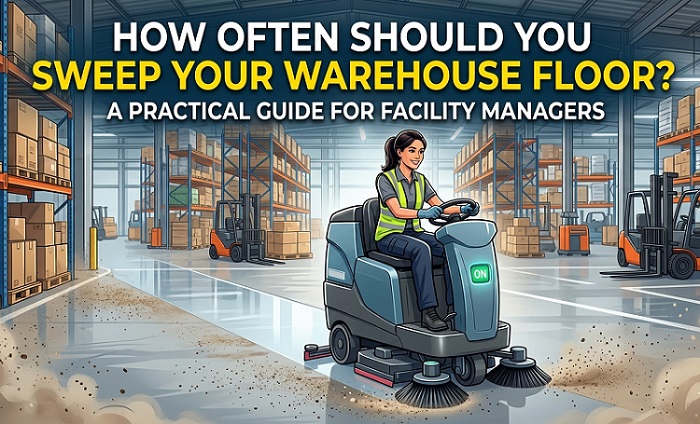
    Keeping a warehouse floor clean is about more than appearances — it directly impacts workplace safety, equipment longevity, and operational efficiency. But how often should you actually run a floor sweeper through your facility? The answer isn't one-size-fits-all. It depends on traffic volume, the type of debris your operation generates, and industry-specific requirements.   Why Regular Sweeping Matters Before diving into frequency, it's worth understanding why consistent sweeping is so important. A clean warehouse floor: Reduces slip and fall risks — Dust, debris, and loose particles create hidden hazards that can cause accidents. Protects equipment — Forklifts, pallet jacks, and other machinery operate less efficiently on dirty floors. Debris can damage tires, clog air filters, and accelerate wear on moving parts. Improves air quality — Fine dust particles that accumulate on floors become airborne when disturbed by traffic. Regular sweeping with a quality industrial floor sweeper equipped with a proper filtration system keeps dust levels under control. Extends floor life — Abrasive debris like gravel, metal shavings, and sand acts like sandpaper under foot and vehicle traffic, gradually wearing down floor coatings and concrete surfaces. Enhances professionalism — Clean facilities make a positive impression on clients, inspectors, and employees alike.   Sweeping Frequency by Facility Type Different types of warehouses have very different cleaning needs. Here's a practical breakdown: High-Traffic Distribution Centers (30,000+ sq ft) These facilities see constant forklift and foot traffic, with debris arriving daily via incoming shipments and outgoing orders. Sweeping should occur at least once per day, and in busier operations, twice daily — once mid-morning and once after the final shift. A ride-on floor sweeper is the most efficient choice here, as it can cover large areas quickly without taking operators away from other tasks for too long. Manufacturing and Production Facilities Workshops that generate metal shavings, wood dust, plastic pellets, or packaging waste need more frequent cleaning. Sweep at least 2–3 times per day, particularly around production lines and loading areas. Heavy debris should be cleaned up immediately to prevent it from being crushed into the floor by machinery. Light Commercial Warehouses (under 20,000 sq ft) Smaller facilities with lower traffic volumes can typically get by with sweeping every 2–3 days. A walk-behind floor sweeper is well-suited for this application, offering good results without the higher cost of a ride-on machine. Cold Storage and Food-Grade Facilities These environments have stricter hygiene requirements. Daily sweeping is mandatory, and many operators choose to sweep after each shift to prevent buildup of food particles that can attract pests. Look for a sweeper with a HEPA filtration system to capture fine dust without spreading contaminants. Outdoor Areas and Loading Docks Loading docks, parking lots, and exterior walkways collect leaves, gravel, and windblown debris. Sweep these areas 2–3 times per week, or more frequently if your location experiences seasonal debris like falling leaves or road salt in winter. Signs You Need to Sweep More Often No matter what schedule you set, pay attention to these warning signs that your current frequency isn't enough: Visible dust buildup on surfaces within hours of cleaning Employees tracking debris from one zone to another Complaints about slippery or dusty floors Frequent maintenance issues with forklifts or other equipment Poor results from indoor air quality monitoring If you notice any of these, increase your sweeping frequency — and consider whether your current floor sweeper is the right model for your debris load. Choosing the Right Floor Sweeper for Your Schedule Your sweeping frequency is only half the equation — your equipment needs to keep up. Here are a few tips: For daily or twice-daily sweeping in large facilities → Invest in a high-capacity ride-on sweeper with a large hopper. You'll minimize trips to empty debris and maximize cleaning time. For every-other-day sweeping in smaller spaces → A compact walk-behind sweeper offers flexibility and lower operating costs. For facilities with fine dust concerns → Choose a sweeper with advanced filtration, such as a dust control system or HEPA filter. Why Jiechi Floor Sweepers Are Built for the Job At Jiechi Cleaning, we design our floor sweepers for real-world industrial and commercial conditions. Whether you need a rugged ride-on model for a busy distribution center or a nimble walk-behind sweeper for a workshop, our machines deliver consistent performance shift after shift. Every Jiechi sweeper features: Efficient sweeping systems that handle everything from fine dust to bulky debris Reliable filtration to keep airborne particles under control Durable construction built to withstand daily use in demanding environments Easy maintenance with readily available spare parts Not Sure What Sweeping Frequency Is Right for You? Every facility is different, and the right schedule depends on your specific operations. Contact Jiechi today and our team can help you evaluate your cleaning needs — and recommend the right floor sweeper and maintenance routine to keep your warehouse safe, clean, and productive.
  • Eco-Friendly Floor Cleaning: How Floor Scrubbers Reduce Water and Chemical Usage
    May 18, 2026
    When it comes to commercial cleaning, sustainability is no longer a nice-to-have — it's a business imperative. Facility managers across warehouses, retail stores, hospitals, and manufacturing plants are increasingly asking the same question: How can we keep our floors spotless while reducing our environmental footprint? The answer lies in modern floor scrubber technology. Today's advanced cleaning machines are designed to achieve superior results with significantly less water and fewer chemicals than traditional methods. This article explores exactly how floor scrubbers make eco-friendly cleaning possible — and why making the switch benefits both your facility and the planet.   How Much Water Do Floor Scrubbers Actually Save? The most dramatic impact of modern floor scrubbers is water conservation. Traditional mopping methods typically consume anywhere from 10 to 30 gallons of water per 1,000 square feet, depending on technique and frequency of bucket changes. In contrast, an automatic floor scrubber uses a fraction of that amount. A typical walk-behind floor scrubber uses approximately 1 to 3 gallons of water per 1,000 square feet — a reduction of up to 90%. Ride-on scrubbers, with their larger tanks and optimized flow systems, achieve similar efficiency on a bigger scale. Over the course of a year, a facility cleaning 50,000 square feet daily could save over 50,000 gallons of water simply by switching from mops to scrubbers. But how does this work? Floor scrubbers are equipped with precision-controlled solution flow systems. Instead of dumping a large volume of water onto the floor and hoping for the best, they dispense a fine, consistent layer of cleaning solution directly in front of the brush or pad. The scrub deck then agitates and lifts dirt, while the squeegee and vacuum system immediately recover the dirty water. This closed-loop process ensures that water is used only where it's needed and recovered promptly — no waste, no unnecessary runoff. Chemical Reduction: Less Is More Equally important is the reduction in cleaning chemical usage. Traditional mopping often requires higher concentrations of detergent to compensate for the inefficiency of the method. With floor scrubbers, the combination of mechanical scrubbing action and precise chemical dispensing means you can achieve better results with 50% to 70% less cleaning solution. Here's why: Mechanical action does the heavy lifting. The rotating brushes or pads physically scrub dirt and grime loose from floor surfaces. This mechanical energy reduces reliance on chemical surfactants to break down soil. Precise dilution control. Many modern floor scrubbers feature built-in chemical dosing systems that automatically mix water and concentrate at the correct ratio. This eliminates guesswork and prevents overuse. Faster drying means less residue. Because scrubbers recover most of the water they dispense, floors dry quickly. This reduces the need for chemical rinse agents, as there's less opportunity for streaking or residue buildup. For facilities using green-certified cleaning products, this combination is especially powerful. A floor scrubber allows you to use lower-concentration, plant-based detergents without sacrificing cleaning performance. Beyond Water and Chemicals: The Broader Environmental Benefits The eco-friendly advantages of floor scrubbers extend beyond direct resource savings. Reduced wastewater disposal. Dirty mop water is typically dumped down drains, carrying chemical residues into local water systems. Floor scrubbers collect used water in a recovery tank, which can be disposed of properly — or in some cases, treated and reused. Lower energy consumption per cleaning cycle. While floor scrubbers do require electricity to operate, the total energy footprint per square foot cleaned is often lower than the combined energy of heating mop water, running a mop wringer, and drying-time ventilation. Extended floor life. Floor scrubbers apply consistent pressure and chemical coverage, reducing wear patterns and surface damage. This means fewer floor restoration projects — saving materials, labor, and waste associated with refinishing or replacing flooring. Healthier indoor air quality. Because scrubbers recover dirty water immediately and floors dry in minutes (rather than the 30+ minutes typical of mopping), there's less moisture left to promote mold, mildew, or bacterial growth. This creates a healthier environment for employees, customers, and patients. Green Cleaning Certifications: What to Look For If environmental compliance is a priority for your facility, look for floor scrubbers and cleaning agents that meet recognized standards: Green Seal (GS-37) — Standard for industrial and institutional cleaners. LEED (Leadership in Energy and Environmental Design) — Points can be earned for using low-chemical cleaning equipment. EPA Safer Choice — Certifies that cleaning chemicals meet stringent human health and environmental criteria. Many modern floor scrubbers from Jiechi Cleaning are compatible with green-certified chemicals and designed to optimize their performance, helping facilities work toward sustainability certifications. Practical Tips to Maximize Eco-Friendly Floor Cleaning Even with the right equipment, small operational adjustments can further reduce your environmental impact: Adjust solution flow settings. Many scrubbers allow you to dial in the exact water flow rate for your floor type. Start low and increase only if needed. Use proper brush or pad pressure. Excessive downward pressure wastes energy and can damage floors. Let the machine's weight and brush design do the work. Schedule efficient routes. Plan cleaning paths to minimize empty travel, saving battery life and reducing overall energy use. Maintain your machine regularly. A well-maintained scrubber recovers more water, dispenses solution accurately, and runs more efficiently. Check squeegee blades, vacuum hoses, and filters frequently. Train operators thoroughly. The most eco-friendly machine in the world is only as green as the person running it. Proper training ensures operators use the correct settings and avoid wasteful habits. Making the Switch: Is an Eco-Friendly Floor Scrubber Right for Your Facility? If your facility currently uses mops and buckets, or operates older scrubber models, upgrading to a modern, water-efficient floor scrubber is one of the most impactful sustainability investments you can make. The water savings alone often offset the equipment cost within the first year, and the chemical reductions provide ongoing operational savings. For facilities already using scrubbers, simple adjustments — like optimizing solution flow rates and switching to concentrated, green-certified chemicals — can deliver measurable environmental gains without any new equipment purchase. Conclusion Eco-friendly floor cleaning is not about sacrificing cleanliness for sustainability. Thanks to modern floor scrubber technology, you can achieve both. By dramatically reducing water consumption, cutting chemical usage in half or more, and improving indoor air quality, automatic floor scrubbers are reshaping what it means to clean responsibly. At Jiechi Cleaning, we are committed to providing efficient, sustainable cleaning solutions that help facilities around the world maintain spotless floors while protecting the environment. Have questions about choosing the right eco-friendly floor scrubber for your facility? Contact our team today — we're here to help you clean smarter, not harder. 🌍
  • How Autonomous Cleaning Robots Are Redefining Facility Maintenance in 2026
    May 16, 2026
    Facility managers in 2026 face a familiar set of challenges: rising labor costs, persistent staffing shortages, and an ever-higher bar for cleanliness standards across commercial and industrial spaces. The old answer — throw more people and more mops at the problem — no longer works.     Enter autonomous cleaning robots. These aren't the timid circle-bouncing vacuums of a decade ago. Today's driverless floor scrubbers are sophisticated, AI-powered machines that navigate complex environments, make real-time decisions, and deliver consistent cleaning results without human supervision. In this article, we explore how autonomous cleaning robots are transforming facility maintenance, what technologies power them, and how JIECHI's intelligent scrubber lineup — the JC80 and JC10 — fits into this revolution.   The Case for Automation in Cleaning 1. Labor Reality The commercial cleaning industry has long relied on manual labor, but the math is shifting: Labor shortages are chronic across hospitality, healthcare, retail, and manufacturing Turnover rates for cleaning staff can exceed 100% annually in some regions Training costs add up — each new hire needs instruction on equipment, chemicals, and safety protocols Autonomous robots don't entirely replace human cleaners, but they augment the workforce. They handle repetitive, large-area scrubbing so that human staff can focus on detail work, disinfection, and customer-facing tasks that require judgment. 2. Consistency at Scale A human cleaner might scrub 500 m² in the morning with full energy, then lose steam by midday. Autonomous robots don't fatigue. They follow programmed routes at consistent speeds, with uniform brush pressure, every single time. For facilities that span thousands of square meters — shopping malls, logistics warehouses, hospitals, and factory floors — this consistency is transformative. 3. Data and Accountability Modern cleaning robots generate data: coverage maps, cleaning logs, battery status, and even air quality readings. Facility managers can verify that every zone was cleaned on schedule — capability that manual cleaning simply cannot match.   Key Technologies Behind Autonomous Cleaning Robots What makes a cleaning robot truly autonomous? It comes down to three core technology pillars: Perception (Seeing) Autonomous robots use a combination of sensors to understand their environment: LiDAR (Laser Radar): Scans surroundings in 270° to 360° to build real-time maps Depth Cameras & Vision Sensors: Recognize objects, people, and changes in the environment Ultrasonic Sensors: Detect transparent or reflective obstacles that LiDAR might miss Anti-collision Bumpers: Physical safety backup if all else fails The JIECHI JC80 uses a comprehensive sensor suite including panoramic monocular cameras, 270° laser radar, 360° depth cameras, and ultrasonic sensors — providing the perception needed for safe autonomous navigation in dynamic environments. Navigation (Thinking) Once the robot sees its environment, it needs to plan a path: SLAM (Simultaneous Localization and Mapping) allows the robot to build a map while tracking its position within it Path optimization algorithms calculate the most efficient route to cover an area without skipping spots or wasting time Dynamic replanning adjusts the route when obstacles appear — a cart left in an aisle, a person walking through The JC80's vision-plus-laser navigation scheme enables it to plan efficient routes autonomously and switch between auto and manual modes as needed. Scrubbing and Recovery (Acting) Autonomous navigation is useless without effective cleaning. Robots combine: Optimized brush pressure matched to floor type (tile, concrete, epoxy) Controlled water and chemical dispensing for consistent wetting Powerful vacuum recovery to leave floors dry and safe immediately after cleaning The JC80 delivers a cleaning performance of 2,040 m²/hour with a 510 mm cleaning width and a robust 70 L solution / 50 L recovery tank configuration — built for extended autonomous runs.   Real-World Applications Warehouses and Logistics Centers Large, open floor plans with minimal pedestrian traffic make warehouses ideal for autonomous cleaning robots. A single JC80 can handle nighttime cleaning of 5,000–8,000 m² of warehouse space, running on a pre-programmed schedule, and returning to its charging station automatically. Retail and Supermarkets Cleaning in retail is tricky — you can't close during business hours, and you can't have wet floors in high-traffic aisles. Compact autonomous robots like the JIECHI JC10 operate at under 65 dB, navigate around customers and shelves, and leave floors dry in one pass. They are small enough (52 × 42 × 49 cm) to clean narrow aisles that bigger machines simply cannot reach. Hospitals and Healthcare Hygiene standards in healthcare leave no room for error. Autonomous cleaning robots can scrub and disinfect floors on a programmed schedule, ensuring every patient room and corridor is cleaned to the same standard every cycle. The combination of scrubbing and chemical disinfection meets hospital-grade requirements while freeing nursing staff from cleaning duties. Schools and Universities Educational facilities benefit from after-hours autonomous cleaning. Robots operate while the building is empty, covering classrooms, libraries, and cafeterias overnight. Staff arrive to clean floors every morning without anyone having to run a mop.   ROI: What Does an Autonomous Robot Deliver? For facility managers evaluating investment in cleaning robotics, the payback typically comes from: Labor savings — One robot can replace 2–3 hours of daily manual scrubbing per shift Reduced water and chemical use — Precise dispensing cuts waste by up to 30% compared to manual mopping Lower equipment wear — Consistent operation extends machine life versus operator-driven abuse Fewer accidents — Dry floors immediately after cleaning reduce slip-and-fall risk Auditable compliance — Digital cleaning records support ISO and health inspections Most facilities see a full ROI within 12–18 months, with ongoing savings in labor and consumables.   How to Choose the Right Autonomous Cleaning Robot Not every facility needs the same robot. Consider: Area size — Large open floors over 5,000 m² → JC80; Small tight spaces under 2,000 m² → JC10 Floor type — Epoxy, concrete, and tile all work with proper brush selection Traffic pattern — Daytime cleaning needs smaller, quieter, obstacle-aware robots; nighttime cleaning can use larger machines Integration needs — Look for robots with API or scheduling interfaces for facility management systems Browse JIECHI's full cleaning robot lineup to find the right match for your facility.   The Future: What's Next for Cleaning Robots? By 2027–2028, expect: Fleet coordination — Multiple robots communicating to cover a facility without overlap Elevator integration — Robots navigating between floors autonomously Predictive maintenance — AI predicting brush wear, battery degradation, and service intervals Chemical-free cleaning — UV-C and steam disinfection integrated into autonomous platforms JIECHI is actively developing these capabilities, leveraging its in-house R&D and manufacturing to bring commercial-grade intelligence to cleaning equipment at a price point accessible to mid-market facilities.   Conclusion Autonomous cleaning robots are no longer a futuristic concept — they are a practical, ROI-positive solution for facility managers dealing with labor constraints and rising cleanliness demands. Whether you need a large-scale driverless scrubber for an industrial warehouse or a compact smart cleaner for a retail space, today's technology delivers. The JC80 driverless floor scrubber and JC10 mini cleaning robot represent two ends of the autonomous cleaning spectrum — both engineered and manufactured in-house by JIECHI with full OEM support for global partners. Interested in bringing autonomous cleaning to your facility? Contact JIECHI to discuss your requirements and get a personalized recommendation.
  • How to Choose a Commercial Floor Scrubber for Different Settings?
    May 16, 2026
      Whether it’s factories, property management, shopping malls, or transportation hubs, every cleaning scenario has its own “tough challenges”—whether it’s grease that won’t come off, a complex environment that’s hard to manage, or low manual efficiency that costs too much! Don’t worry—Jiechi has already developed tailored cleaning solutions for these four common scenarios, precisely addressing each pain point so you don’t have to lift a finger.   1️⃣ Factories/Industrial Parks (Heavy Grease, Large Particles, Large Areas) Challenges: Vast areas, stubborn engine oil and metal shavings, incomplete manual cleaning, and dust generation. Solution: Choose a ride-on or fully automatic push-type machine based on the area. With powerful scrubbing capabilities, it works on both concrete and epoxy floors, providing deep cleaning while preventing dust-related secondary contamination—compliant and hassle-free.   2️⃣ Property Management/Residential Complexes (Diverse Areas, Quiet Operation, Frequent Cleaning) Challenges: Hallways, garages, and plazas feature diverse layouts and multiple floor materials, requiring quiet operation to avoid disturbing residents. Solution: Compact push-type and ride-on models can navigate narrow elevators and stairwells, enabling a single machine to clean multiple floors. Small-to-medium ride-on floor scrubber cover garages and plazas, protecting epoxy floors and tiles while ensuring scratch-free, residue-free cleaning. They fit in elevators and prevent floor scratches.     3️⃣ Commercial Complexes / Shopping Malls (High Foot Traffic, Need for Rapid Cleaning, Shiny Floors) Challenges: Long operating hours and heavy foot traffic; cleaning must not disrupt shoppers’ experience; floors must dry quickly to prevent slipping and maintain the mall’s image. Solution: Select low-noise, maneuverable push-type or ride-on models based on area size; large-capacity water tanks and long battery life allow for quick cleaning of large areas. Floors are left shiny and streak-free, enhancing the mall’s prestige and customer experience.   4️⃣ Transportation Hubs/Underground Parking Garages (Extremely Large Areas, Heavy Tire Marks, Heavy Dust) Challenges: Open spaces, high cleaning frequency, and extremely low manual cleaning efficiency. Solution: Large ride-on models can clean tens of thousands of square meters daily, efficiently removing tire marks and dust to enhance the hub’s prestige and ensure safe passage, safeguarding the city’s image.   There are no industrial or commercial cleaning challenges we can’t solve—only the wrong cleaning solution! Choose Jiechi to keep every corner spotless!
  • Floor Sweeper vs Floor Scrubber: What's the Difference and Which One Is Right for Your Facility?
    May 15, 2026
    Floor Sweeper vs Floor Scrubber: What's the Difference and Which One Is Right for Your Facility? When it comes to industrial and commercial floor cleaning, two machines dominate the conversation: floor sweepers and floor scrubbers. While they may look similar at first glance, these machines serve very different purposes. Choosing the wrong one — or using one when you actually need the other — can lead to wasted time, poor cleaning results, and unnecessary equipment costs. In this article, we'll break down the key differences between floor sweepers and floor scrubbers, explain when to use each, and help you decide which machine (or combination) is right for your facility. What Is a Floor Sweeper? A floor sweeper is designed to collect dry debris — dust, dirt, leaves, paper, metal shavings, wood chips, and other loose particles — from hard surfaces. It uses rotating side brushes to sweep debris into a main brush or conveyor belt, which then lifts the debris into a hopper. Most modern floor sweepers also feature a vacuum or dust filtration system to control airborne dust during operation. Floor sweepers are typically divided into two categories: Walk-behind sweepers — ideal for smaller areas like workshops, retail stores, and warehouses. Ride-on sweepers — suited for large industrial floors, parking lots, and outdoor areas. JIECHI offers a range of ride-on sweepers including the BA1200, BA1400, and BA2100 models, each designed to handle different facility sizes and debris volumes. What Is a Floor Scrubber? A floor scrubber is designed for wet cleaning — it applies water and cleaning solution, scrubs the floor with rotating brushes or pads, and then vacuums up the dirty water, leaving the floor clean and dry. Floor scrubbers are essential for removing grease, stains, sticky residues, and ground-in dirt that a sweeper cannot handle. Floor scrubbers also come in walk-behind and ride-on configurations: Walk-behind scrubbers — great for smaller commercial spaces like restaurants, hotels, and retail stores. Ride-on scrubbers — engineered for large warehouses, factories, and distribution centers. JIECHI's scrubber lineup includes the full range of walk-behind and ride-on floor scrubbers, from compact models to heavy-duty industrial machines. Key Differences Between Floor Sweepers and Floor Scrubbers Aspect Floor Sweeper Floor Scrubber Primary Function Collects dry debris Washes and dries floors Cleaning Medium Brushes + vacuum Water + detergent + brushes Surface Type Dry debris only Wet cleaning, stains, grease After-Cleaning Debris in hopper Floor is wet then dried Best For Warehouses, parking lots, factories Food plants, hospitals, showrooms Outdoor Use Yes (with dust control) Generally indoor only   When to Use a Floor Sweeper A floor sweeper is the right choice when your main challenge is dry debris. Common scenarios include: Warehouses and distribution centers — dust, cardboard particles, and loose packaging materials accumulate quickly. Manufacturing workshops — metal shavings, sawdust, and plastic pellets from production processes. Parking lots and outdoor areas — leaves, sand, gravel, and general litter. Construction sites — dry debris and dust before finishing work begins. If your facility produces primarily dry waste, an industrial floor sweeper will outperform a scrubber at a lower operating cost. The BA1900 large enclosed sweeper is an excellent choice for facilities that need dust-free sweeping in large areas, thanks to its fully enclosed cab and advanced filtration system. When to Use a Floor Scrubber A floor scrubber becomes necessary when floors need deep cleaning. Consider a scrubber when: Food processing facilities — grease, food residues, and sticky spills. Hospitals and healthcare — disinfection and removal of bio-contaminants. Retail and showrooms — maintaining a polished, stain-free appearance. Hotels and restaurants — daily wet cleaning of high-traffic dining and lobby areas. Chemical and pharmaceutical plants — cleaning up liquid spills and chemical residues. Scrubbers remove what sweepers leave behind — the ground-in dirt and oily stains that accumulate over time. For mixed-use facilities, alternating between sweeping and scrubbing is often the best approach. Can One Machine Do Both? The Combination Solution If your facility deals with both dry debris and wet cleaning needs, you don't necessarily need to buy two separate machines. A combination scrubber sweeper offers the best of both worlds in a single unit. JIECHI's combination machines, such as the M12 compact walk-behind and the M20 ride-on combi machine, can sweep dry debris and scrub the floor in a single pass. This is especially valuable for facilities where cleaning time is limited and different types of dirt build up throughout the day. For larger operations, the M10 mid-size ride-on combi or M17 large ride-on combi provide high-capacity sweeping and scrubbing in one efficient machine. How to Choose the Right Machine for Your Facility Here's a simple decision framework: Assess your debris type. Is it mostly dry (dust, paper, metal shavings)? → Consider a sweeper. Is it mostly wet or sticky (grease, spills, stains)? → Go with a scrubber. Is it both? → Consider a combination machine. Evaluate your floor size. Small areas under 2,000 m² → walk-behind models. Medium areas 2,000–5,000 m² → compact ride on sweeper models. Large areas over 5,000 m² → large ride-on machines. Think about frequency. If you need daily dry cleaning and weekly deep scrubbing, a combination machine saves you from buying and maintaining two separate units. Consider your surface type. Smooth concrete, tile, and epoxy floors work well with both sweepers and scrubbers. Rough or uneven surfaces may favor sweepers with heavy-duty brushes. Why Choose JIECHI for Your Floor Sweeping and Scrubbing Needs JIECHI is not a trading company or reseller. We are a factory with over 60,000 m² of manufacturing facilities in Shanghai and Jiangxi, covering the entire process from R&D and design to production, testing, and global shipping. This means every sweeper, scrubber, and combination machine you receive is built under our direct quality control — not sourced from third parties. For B2B partners, we offer: OEM customization — your branding, color scheme, and packaging Spare parts support — long-term availability and fast delivery Technical collaboration — joint product development for your market Stable supply — consistent quality across every shipment Contact JIECHI Today Not sure whether a floor sweeper, floor scrubber, or combination machine is right for your facility? Our engineering team can help you evaluate your cleaning needs and recommend the ideal solution. Contact JIECHI today for a consultation or product inquiry.
  • Floor Scrubber Battery Maintenance: Extend Battery Life and Reduce Replacement Costs
    May 14, 2026
    Batteries are one of the most expensive components of any floor scrubber. Whether you use a walk-behind floor scrubber or a ride-on floor scrubber, your machine's battery system requires regular attention to perform reliably day after day. Neglecting battery maintenance can lead to reduced runtime, slower charging, and premature failure — which means costly replacement long before you expected it. This guide covers practical battery maintenance techniques that work across lead-acid and lithium-ion floor scrubber batteries, helping you get the most life out of your power source and keep operating costs under control. 1. Understand Your Battery Type Before you can maintain a battery properly, you need to know what you're working with. The two most common types in floor scrubbers are: Flooded Lead-Acid Batteries — Require regular watering, venting, and equalization charging. These are the traditional workhorses, durable but high-maintenance. Sealed Lead-Acid (AGM/Gel) Batteries — Maintenance-free in terms of watering, but still sensitive to overcharging and deep discharge. Lithium-Ion Batteries — Lightweight, long cycle life, and virtually zero daily maintenance. However, they need compatible chargers and temperature management. If you're unsure which type your machine uses, check the battery label or consult your supplier of floor scrubber batteries and chargers. Using the wrong charging profile can damage the battery in a single cycle. 2. Establish a Consistent Charging Routine How and when you charge matters more than you might think. Here are the essential guidelines: Charge after every use — Never let a lead-acid battery sit discharged. Even a few hours in a discharged state can cause sulfation, which permanently reduces capacity. Avoid partial charges on lead-acid — Lead-acid batteries prefer full charge cycles. Frequent topping-off without a full charge shortens their lifespan. Lithium is more flexible — Lithium-ion batteries tolerate partial charging well. You can top them off without damage. Use the correct charger — Always use the charger that came with your machine or one approved by the manufacturer. A mismatched charger is one of the fastest ways to destroy a battery. 3. Watering Your Lead-Acid Battery (If Applicable) For flooded lead-acid batteries, proper watering is critical: Check water levels weekly — Use distilled water only. Tap water contains minerals that reduce battery life. Water after charging — Charging causes the electrolyte level to rise. Adding water before charging can cause overflow and acid loss. Keep plates submerged — Never let the plates be exposed to air. This causes irreversible damage. Don't overfill — Fill to the level indicated by the manufacturer, typically just above the plates. 4. Clean Battery Terminals and Compartment Corrosion and dirt can significantly reduce electrical conductivity: Inspect terminals monthly — Look for white or bluish corrosion around the posts and cable ends. Clean with a baking soda solution — Mix a small amount of baking soda with water, apply to corroded areas, scrub with a brush, and rinse clean. Apply terminal protectant — A thin layer of petroleum jelly or commercial anti-corrosion spray helps prevent future buildup. Keep the battery compartment dry — Moisture accelerates corrosion and can cause short circuits. Wipe down the compartment after each cleaning shift. 5. Monitor Charge Cycles and Depth of Discharge Battery lifespan is measured in charge cycles. Each time you discharge and recharge, you use one cycle. The key to longevity is: Avoid deep discharges — Lead-acid batteries suffer when discharged below 50%. Lithium batteries are more forgiving but still benefit from staying above 20%. Track usage patterns — If your machine is consistently running out of power before the shift ends, you may need a higher-capacity battery or an additional charging opportunity during breaks. Rotate batteries — If your facility uses multiple batteries per machine, rotate them evenly to ensure balanced wear. A good rule of thumb: a well-maintained lead-acid battery should deliver 1,000 to 1,500 cycles. A lithium battery can deliver 2,000 to 5,000 cycles depending on usage conditions. Read our detailed comparison of lithium vs lead-acid batteries for floor scrubbers to choose the right power source for your facility. 6. Store Batteries Properly During Downtime If your floor scrubber won't be used for an extended period: Store in a cool, dry place — High temperatures accelerate chemical reactions that degrade batteries. Ideal storage temperature is 15°C to 25°C (59°F to 77°F). Charge lead-acid batteries to 100% before storage — Then recharge every 30 days to prevent sulfation. Store lithium batteries at 50-60% charge — Unlike lead-acid, lithium batteries should not be stored at full charge. This reduces stress on the cells. Disconnect the battery — If the machine will sit unused, disconnect the battery to avoid parasitic drain from onboard electronics. 7. Know the Warning Signs of Battery Failure Catch problems early to avoid unexpected downtime: Reduced runtime — The most common early sign. If a full charge no longer lasts as long as it used to, capacity is degrading. Slow charging — If charge times increase significantly, internal resistance may be rising. Swelling or bulging — This is a safety hazard, especially with lithium batteries. Stop using the battery immediately. Excessive heat during charging — Batteries naturally warm up, but if they become hot to the touch, there may be an internal issue. Corrosion or acid leaks — Visible acid around terminals or cracks in the battery case means replacement is needed. 8. Schedule Professional Inspections While daily and weekly checks keep your battery healthy, an annual professional inspection adds an extra layer of protection: Load testing — Confirms the battery can still deliver its rated capacity under load. Specific gravity testing (lead-acid) — Measures the health of individual cells. Internal resistance measurement — Identifies failing cells before they cause operational issues. If you don't have in-house maintenance staff, many walk-behind floor scrubber dealers and service centers offer battery inspection as part of their maintenance packages. Conclusion Your floor scrubber's battery is a significant investment, and protecting it doesn't require complex procedures. A few consistent habits — proper charging, regular cleaning, correct watering, and attentive monitoring — can double the useful life of your battery and save your facility thousands of dollars in replacement costs. At Jiechi Cleaning, we supply high-quality walk-behind floor scrubbers and ride-on floor scrubbers with reliable battery systems designed for long-term performance. Whether you need a compact unit for tight spaces or a large machine for big facilities, we have solutions tailored to your needs. Have questions about battery maintenance or floor scrubber selection? Contact our team today — we're here to help you keep your equipment running at its best.
  • How to Choose the Right Floor Cleaning Equipment for Hospitals: A Complete Buying Guide
    May 13, 2026
    Hospitals demand the highest standards of cleanliness. Unlike warehouses or retail spaces, medical facilities must meet strict infection control protocols, maintain silent operation near patient rooms, and handle a wide range of floor types — from vinyl and linoleum to sealed concrete and tile. Choosing the wrong hospital floor cleaning equipment can compromise hygiene, increase labor costs, and even violate health regulations. This guide walks you through every key factor, helping you select the ideal cleaning solution for your medical facility. Why Hospital Cleaning Is Different Before comparing machines, it helps to understand the unique demands of a healthcare environment. Infection control comes first. Cross-contamination is a constant risk. A machine that spreads dirty water from one ward to another can undo hours of sanitation work. Hospitals need equipment that continuously applies fresh water and squeegees dirty water into a separate tank — a feature standard in quality floor scrubbers. Noise levels matter. Patient rest and staff communication are critical. A scrubber with a noise rating above 70 dB can disturb recovery wards and neonatal units. Many modern machines offer quiet modes below 60 dB, making them suitable for daytime cleaning near occupied rooms. Floor diversity is real. A hospital might have vinyl flooring in patient rooms, terrazzo in hallways, epoxy in the pharmacy, and ceramic tile in restrooms. The right equipment must accommodate interchangeable brush or pad types. Step 1: Match the Machine Type to Your Facility Size Hospitals vary greatly in size, and the right machine depends on your square footage, aisle width, and cleaning frequency. Walk-Behind Floor Scrubbers are ideal for small to medium facilities such as clinics, specialty hospitals, or individual departments within a larger complex. They are compact, maneuverable, and easy to store. A walk-behind floor scrubber with a 20" to 26" cleaning path works well for corridors 4 to 6 feet wide. Ride-On Floor Scrubbers suit large hospitals with 50,000+ square feet of hard floor. They cover more ground per hour — typically 40,000 to 70,000 sq ft per hour — significantly reducing labor costs. A ride-on floor scrubber with a 28" to 36" scrub deck is a strong choice for main hallways, lobbies, and emergency department floors. Autonomous Floor Scrubbers are an emerging option for hospitals looking to optimize staffing. These robotic machines can clean designated zones during overnight hours, freeing housekeeping staff to focus on high-touch disinfection tasks. Step 2: Prioritize Infection Control Features Hospital floors are reservoirs for bacteria and viruses. Every scrubber you consider should support these infection prevention requirements: Chemical Injection Systems allow operators to add EPA-approved hospital disinfectants directly to the solution tank. This enables simultaneous scrubbing and disinfection — a huge time saver for environmental services teams. Hygienic Squeegee and Tank Design. Look for machines with smooth, easy-to-clean tanks that resist biofilm formation. Some advanced models feature antimicrobial additives molded into tank walls. HEPA Filtration. For scrubbers used in operating rooms, ICUs, and isolation wards, a HEPA filter on the vacuum fan prevents fine particulates from being recirculated into the air. Step 3: Check Floor Type Compatibility Not all scrubber brushes are created equal. Choosing the wrong one can scratch delicate flooring or fail to remove stubborn grime. Pad Drivers are best for smooth, resilient flooring like vinyl sheet, linoleum, and polished concrete. A good walk-behind scrubber with pad driver works with a variety of pads ranging from aggressive stripping pads to ultra-fine burnishing pads for high-gloss finishes. Disk Brushes handle medium-textured surfaces like quarry tile and terrazzo. They provide good scrubbing action without excessive wear. Cylindrical Brush Scrubbers use counter-rotating roller brushes that trap debris between the brushes and the floor. They excel at sweeping debris into the recovery tank without requiring a separate sweeping pass — ideal for hospital entrances and high-traffic areas. Step 4: Evaluate Battery Technology Hospital cleaning schedules often run 24/7, with multiple shifts covering different zones. Battery runtime and charging speed directly impact operational efficiency. Lithium-Ion Batteries have become the standard for modern commercial floor scrubber machines. They charge 3x faster than traditional lead-acid batteries, have no memory effect, and can be opportunity-charged during breaks. For a hospital running two cleaning shifts per day, lithium-ion can eliminate the need for a second set of batteries. Lead-Acid Batteries remain a cost-effective option for smaller facilities with a single daily cleaning window. They are heavier and require regular water maintenance, but the upfront savings can be significant. Key spec to check: Look for a runtime of at least 3.5 hours under normal load for full-shift coverage. Step 5: Consider Environmental and Safety Factors Chemical-Free Cleaning. Some advanced scrubbers use electrolyzed water technology (sometimes called "activated water" or "EC water") to create a cleaning and sanitizing solution from tap water and salt. This eliminates the need for transporting and storing chemical concentrates — a real advantage in hospitals where chemical safety is a concern. Slip Resistance. Wet floors are a liability in any facility, but particularly dangerous in hospitals where patients may be unsteady on their feet. Machines with aggressive squeegee systems that leave the floor nearly dry after one pass are strongly preferred. Maneuverability. Hospital corridors are often cluttered with hand sanitizer stations, crash carts, and wheelchairs. A tight turning radius (under 40 inches for walk-behind models) makes daily cleaning much more practical. For tighter spaces, a mini walk-behind floor scrubber offers excellent maneuverability in narrow hospital corridors. Step 6: Set a Realistic Budget Healthcare cleaning equipment is an investment. Entry-level walk-behind scrubbers start around $3,000 to $6,000. Mid-range models with essential infection control features range from $8,000 to $15,000. Ride-on and autonomous models can run from $18,000 to $40,000+ depending on capacity and technology. It helps to calculate total cost of ownership, not just purchase price. A slightly more expensive machine with lithium-ion batteries and a chemical injection system can pay for itself in labor and chemical savings within 12 to 18 months. Making the Right Choice for Your Hospital Selecting medical facility floor cleaning solutions is a decision that affects patient safety, staff efficiency, and operational costs. Start by surveying your facility's floor types, measuring corridor widths, and reviewing your current cleaning schedule. Then match those requirements against the machine types and features discussed here. At Jiechi Cleaning, we specialize in designing floor scrubbers for demanding environments, including healthcare facilities. Our range includes walk-behind, ride-on, and cylindrical brush models — all built with the hygiene, noise, and durability standards that hospitals require. Have questions about which model fits your hospital? Contact us for a free consultation — we'll help you find the right machine for your facility's specific needs.
  • How to Choose the Right Floor Scrubber for Your Facility Size: Tank Capacity, Cleaning Width & Battery Life Explained
    May 12, 2026
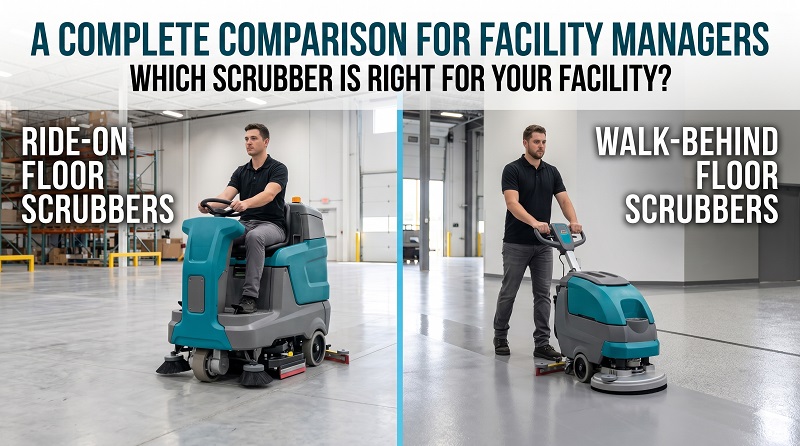
    Choosing a floor scrubber isn't just about picking the most expensive model or the one with the flashiest features. The single most important factor is matching the machine to your facility's size. Get this wrong, and you either overpay for capacity you don't need or end up with a machine that can't finish the job before running out of battery or water. In this guide, we break down the three critical specs — tank capacity, cleaning width, and battery life — and show you exactly how to calculate what your facility needs. Why Facility Size Matters for Floor Scrubber Selection Every cleaning manager has faced this scenario: a brand-new scrubber that runs out of water halfway through the warehouse, or a machine that takes twice as long as expected because the cleaning path is too narrow. The root cause is almost always the same — the machine was chosen without matching its specs to the actual floor area. Here's a quick decision framework based on facility size: Small (retail shops, offices, clinics, under 5,000 sq ft): Walk-behind scrubbers (16–20 inch), 10–13 gallon tank Medium (schools, hotels, supermarkets, 5,000–20,000 sq ft): Walk-behind scrubbers (20–28 inch), 13–20 gallon tank Large (warehouses, factories, airports, 20,000–100,000+ sq ft): Ride-on scrubbers (28–36 inch), 20–40+ gallon tank Note: Tank capacity varies by brand and model. Always check the manufacturer's spec sheet. 1. Tank Capacity: How Much Floor Can You Clean Per Refill? Tank capacity determines how long you can clean without stopping to empty the dirty water tank and refill with fresh solution. This is arguably the most overlooked spec in floor scrubber selection. The rule of thumb: A floor scrubber typically covers about 10–15 square feet per gallon of solution, depending on the floor type. Porous floors (like unsealed concrete) consume more solution, while smooth floors (like tile or sealed concrete) use less. Example calculation: A 10-gallon machine ≈ 100–150 sq ft per tank A 20-gallon machine ≈ 200–300 sq ft per tank A 40-gallon machine ≈ 400–600 sq ft per tank For a 50,000 sq ft warehouse, a machine with a 40-gallon tank would require about 3–4 refills to complete a full cleaning cycle. That's significant downtime. Here's the bottom line: If your facility requires more than 3 tank refills per cleaning session, consider upgrading to a larger-capacity model. 2. Cleaning Width: How Fast Can You Cover the Floor? Cleaning width determines productivity — wider means fewer passes, shorter cleaning time, and less labor cost. The simple formula: A 20-inch scrubber covers roughly 20,000 sq ft per hour (assuming 2.5 mph walking speed, 85% efficiency for overlap) A 28-inch scrubber covers roughly 28,000 sq ft per hour A 34-inch ride-on scrubber covers roughly 38,000–45,000 sq ft per hour What this means for your facility: Under 10,000 sq ft: A 17–20 inch walk-behind is sufficient. Cleaning takes roughly 30 minutes. 10,000–30,000 sq ft: A 24–28 inch walk-behind or compact ride-on. Cleaning takes 45–90 minutes. Over 30,000 sq ft: A 30+ inch ride-on scrubber. Cleaning takes 1–3 hours depending on layout. If your cleaning team spends more than 2 hours per day on floor cleaning, a wider scrubber could cut labor costs in half over the machine's lifespan. 3. Battery Life: Can Your Scrubber Handle Back-to-Back Shifts? Battery runtime is the third leg of the stool. Even with the right tank and cleaning width, a dead battery at the wrong time brings everything to a halt. Key battery considerations: Lead-acid batteries: Typically provide 3–5 hours of runtime, but require 8+ hours to charge plus cool-down time. Not suitable for multi-shift operations. Lithium batteries: Provide 4–6 hours of runtime and can be opportunity-charged during breaks (30 minutes of charging gives 1–2 hours of operation). Ideal for multi-shift facilities. For a 50,000 sq ft facility with a ride-on scrubber: Lead-acid: May not finish a full shift on one charge. Requires designated charging room with ventilation. Lithium: Can finish the job and be recharged in time for the next shift. Pro tip: If your facility operates on two shifts, skip lead-acid entirely and invest in lithium-powered equipment. The upfront cost is higher, but the productivity gain is substantial. How to Match Floor Scrubber to Your Specific Facility Here's a step-by-step approach to choosing the right scrubber: Measure your total cleanable floor area (exclude areas occupied by shelving, machinery, or storage) Estimate your cleaning budget (minutes per cleaning session and number of shifts) Calculate the minimum cleaning width you need to stay within that budget Determine required tank capacity based on frequency of refills your team can tolerate Choose the battery type that matches your shift schedule For example, a 30,000 sq ft warehouse with one shift: Cleaning width needed: 28+ inches (≤90 minute cleaning time) Tank capacity needed: 20–30 gallons (1–2 refills) Battery: Lithium recommended for consistent runtime across the shift Suggested machine: A walk-behind floor scrubber like Jiechi's JD-28B For a 100,000 sq ft logistics center running two shifts: Cleaning width needed: 34+ inches ride-on Tank capacity needed: 40+ gallons Battery: Lithium mandatory for opportunity charging between shifts Suggested machine: A ride-on floor scrubber like Jiechi's RS-36 Common Mistakes When Choosing a Floor Scrubber 1. Overestimating cleaning width coverage A 20-inch scrubber doesn't really clean 20 inches — subtract 1–2 inches for overlap Real-world efficiency is around 80–85% 2. Buying a scrubber that's too small Leads to operator fatigue from extra passes Increases labor costs over the machine's lifetime Often requires a second cleaning session to finish 3. Ignoring floor type and condition Rough concrete requires different pad pressure than smooth tile Uneven floors need larger squeegees or dual-squeegee systems for effective drying performance Solution consumption varies dramatically by floor porosity 4. Neglecting squeegee system quality A poor squeegee leaves streaks and wet spots, creating slip hazards Look for machines with adjustable squeegee pressure and tilt-back protection Final Recommendation There's no one-size-fits-all floor scrubber. The right choice depends on your specific facility size, floor type, shift schedule, and cleaning priorities. For small facilities (<5,000 sq ft): Compact walk-behind with lithium battery. Look for easy maneuverability around obstacles. For medium facilities (5,000–20,000 sq ft): Mid-size walk-behind with at least 20-inch cleaning width. Prioritize tank capacity and battery runtime. For large facilities (>20,000 sq ft): Ride-on scrubber with lithium battery and large tank capacity. Consider models with dual squeegee for better drying results and efficiency. Jiechi Cleaning offers a full range of floor scrubbers designed for facilities of every size — from compact walk-behind models for small shops to heavy-duty ride-on machines for industrial warehouses. Each unit is built with lithium battery compatibility, easy-maintenance squeegee systems, and durable polyethylene tanks. Ready to find the perfect floor scrubber for your facility? Contact our team for a personalized recommendation based on your floor plan and cleaning schedule. We'll help you calculate the exact specs you need — no guesswork, no overspending. What's your facility size? Drop us a message and we'll match you with the right machine.
  • Floor Scrubber Maintenance 101: Essential Tips to Extend the Life of Your Cleaning Equipment
    May 11, 2026
    Why Regular Maintenance Matters for Your Floor Scrubber A commercial floor scrubber is a significant investment. Whether you operate a walk-behind or a ride-on model, proper maintenance is the key to maximizing its lifespan, minimizing downtime, and keeping your facility's floors spotless. Neglecting routine care can lead to costly repairs, reduced cleaning performance, and premature equipment failure. In this guide, we'll walk you through the essential floor scrubber maintenance tips every facility manager should know. 1. Clean the Squeegee Blades Daily The squeegee is responsible for drying the floor after scrubbing. If the blades are dirty, cracked, or worn, water will be left behind — creating slip hazards and slowing down your cleaning operation. What to do: After each use, rinse the squeegee blades with clean water. Remove any string, hair, or debris wrapped around the blade edges. Inspect for nicks and wear. Rotate or replace blades as needed (every 3–6 months depending on usage). Worn squeegee blades force you to go over the same area twice, wasting time and water. 2. Check and Clean the Brush or Pad Deck Your floor scrubber's brushes or pad drivers do the heavy lifting — scrubbing dirt and grime off the floor. Over time, they accumulate debris, grease, and chemical residue, which reduces scrubbing efficiency. What to do: Remove brushes after each shift and rinse them thoroughly. Check for uneven wear — if bristles are worn on one side, the brush may need replacement or the deck may need adjustment. Replace brushes every 6–12 months depending on floor type and usage frequency. Using worn or dirty brushes can also damage the floor surface. If you're unsure which brush type to use, check out our guide on floor scrubber brush types to select the right pad or disc for your specific floor. 3. Empty and Rinse the Recovery and Solution Tanks Stagnant water and chemical residue inside the tanks can cause odors, bacterial growth, and clogged drain lines. This is one of the most overlooked yet critical routine care steps. What to do: Empty both the recovery and solution tanks after every use. Rinse tanks with fresh water and wipe them down. Leave the tank lids open to air dry — this prevents mold and mildew. A dirty tank can lead to clogged filters and vacuum motor damage over time. 4. Inspect and Replace Vacuum Filters The vacuum motor pulls dirty water from the floor into the recovery tank. A clogged or wet filter starves the motor of airflow, causing it to overheat and fail. What to do: Check the vacuum filter weekly. Tap out loose debris and rinse foam filters with water (let them dry completely before reinstalling). Replace paper or HEPA filters according to the manufacturer's schedule. A clean filter not only protects the vacuum motor but also ensures better water pickup — leaving floors drier after cleaning. 5. Battery Care: The Heart of Your Machine Whether your scrubber uses lithium or lead-acid batteries, battery maintenance is critical. For lead-acid batteries: Check water levels weekly. Distilled water only — never tap water. Keep terminals clean and free of corrosion. Equalize charge every 10–15 cycles to prevent sulfation. For lithium batteries: No watering needed, but avoid deep discharges. Store at 50% charge if the machine won't be used for extended periods. Proper battery care can double the useful life of your power source and prevent unexpected downtime during a shift. 6. Inspect Hoses and Seals for Leaks Cracked vacuum hoses or worn seals are a common source of reduced cleaning performance. If you notice water leaking from the machine or a sudden drop in water pickup, check the hoses first. What to do: Visually inspect all hoses monthly. Listen for air hissing — that indicates a vacuum leak. Replace cracked or brittle hoses immediately. A small crack can quickly turn into a major vacuum system failure if ignored. 7. Lubricate Moving Parts and Fasteners Your floor scrubber has several pivot points, wheel bearings, and mechanical linkages that need periodic lubrication. What to do: Apply grease or machine oil to pivot points and bearings per the operator manual. Avoid over-lubricating — excess grease attracts dust and debris. Check the scrub head lift mechanism and steering components regularly. Lubrication reduces wear, prevents squeaking, and keeps the machine operating smoothly. 8. Store Your Machine Properly Where and how you store your floor scrubber matters. What to do: Store in a dry, temperature-controlled area. Never leave the scrubber outdoors or in freezing conditions (water left in the system can freeze and crack hoses, pumps, and tanks). Charge batteries after use but don't leave them on the charger indefinitely. Proper storage is the simplest way to prevent weather-related damage and extend equipment life. Establish a Maintenance Schedule The key to long equipment life is consistency. Create a simple daily, weekly, and monthly checklist: Frequency Task Daily Clean squeegee, rinse tanks, check brush wear Weekly Inspect vacuum filter, check battery water (lead-acid), test all functions Monthly Inspect hoses, lubricate moving parts, check fasteners Quarterly Replace squeegee blades, replace brushes if needed, deep-clean tanks Post this checklist near your charging station so operators never skip a step. Why Choose JIECHI for Your Cleaning Equipment? At JIECHI, we don't just manufacture commercial floor scrubbers — we stand behind them with comprehensive spare parts support and technical collaboration. With 60,000+ m² of manufacturing facilities and rigorous quality control, our machines are built to last. And when you need parts or service guidance, our team is ready to help. Keep Your Scrubber Running Like New A well-maintained floor scrubber doesn't just clean better — it saves you money on repairs, reduces operator frustration, and extends the life of your investment by years. Start with these basics, build a routine, and your equipment will thank you. Have questions about maintaining your specific model? Contact us — we're happy to provide tailored advice.
  • Lithium vs Lead-Acid Batteries for Floor Scrubbers: Which Power Source Is Right for Your Facility?
    May 09, 2026
    When buying a floor scrubber, most buyers focus on cleaning width, tank capacity, and brush type. But there's a quieter decision that can make or break your daily operations: the battery. Walk into any facility using cordless floor scrubbers, and you'll find two camps: those running on traditional lead-acid batteries and those that have switched to lithium. Each has strong advocates. Each has trade-offs. In this guide, we break down the real differences between lithium and lead-acid batteries in floor cleaning equipment — from daily runtime and charging habits to total cost of ownership — so you can pick the right power source for your facility. Why Battery Choice Matters More Than You Think A floor scrubber's battery isn't just an accessory — it's the heart of the machine. It determines: How long you can clean before needing a recharge When you can clean (during or between shifts) How much maintenance the cleaning team needs to perform How long the machine lasts before major component replacement Choose wrong, and you might end up with a machine that can't finish the day's cleaning, requires mid-shift battery swaps, or needs replacement batteries within two years. Lead-Acid Batteries: The Old Reliable Lead-acid batteries have powered industrial cleaning equipment for decades. They're well understood, widely available, and significantly cheaper upfront. Pros Lower initial cost — A lead-acid battery pack costs 40–60% less than an equivalent lithium pack Widely recyclable — Over 99% of lead-acid battery material is recycled in North America and Europe Simple replacement — Any service technician can source and swap lead-acid batteries Tolerant of cold — Performance in sub-zero environments is more predictable than early lithium chemistries Cons Slow charging — Full charge takes 8–10 hours (overnight only) Limited partial charging — Deep discharge cycles are recommended; frequent top-ups shorten lifespan Heavier — A lead-acid pack for a mid-size ride-on scrubber can weigh 300+ kg, adding to machine weight and floor loading Maintenance required — Regular water topping, terminal cleaning, and equalization charges Shorter cycle life — Typically 500–800 charge cycles before capacity drops below 70% Best for: Facilities with single-shift operation, overnight charging schedules, and tighter upfront budgets. Lithium Batteries (LiFePO4): The Modern Upgrade Lithium iron phosphate (LiFePO4) has become the gold standard in premium floor scrubbers over the past five years. While more expensive initially, the operational advantages are significant. Pros Fast charging — 80% charge in 1–2 hours; full charge in 3–4 hours Opportunity charging — Top up during breaks without damaging battery life No maintenance — Sealed unit, no water filling, no terminal cleaning Lightweight — Typically 40–60% lighter than equivalent lead-acid Long cycle life — 2,000–5,000 charge cycles depending on depth of discharge Consistent power — Voltage stays flat throughout the discharge, meaning no performance drop as the battery drains Built-in BMS — Battery Management System protects against overcharge, over-discharge, and overheating Cons Higher upfront cost — 2–3× the price of lead-acid Temperature sensitivity — Charging below 0°C / 32°F requires built-in heating (available on premium packs) Specialized replacement — Not all service centers stock lithium packs for older models Disposal regulations — Requires certified recyclers (though recycling infrastructure is growing fast) Best for: Multi-shift operations, facilities that can't spare 8+ hours for charging, and buyers optimizing for long-term cost. Head-to-Head Comparison Factor Lead-Acid (AGM/Gel) Lithium (LiFePO4) Upfront cost (per kWh) $150–$250 $400–$800 Full charge time 8–10 hours 2–4 hours Partial charging Not recommended Fully supported Cycle life 500–800 cycles 2,000–5,000 cycles Weight (for 24V/200Ah) ~150 kg ~55 kg Maintenance Watering, cleaning None Voltage sag under load Moderate to significant Minimal Typical lifespan 1.5–3 years 5–10 years Recyclability Excellent (99%+) Growing (60–80%) Real-World Scenarios Scenario 1: A 50,000 sq ft warehouse on single-shift operations Verdict: Lead-acid works well. The scrubber runs 4 hours per day, charges overnight, and sits idle for 16 hours. Lead-acid's 8-hour charge time is irrelevant here. The $3,000–$5,000 upfront savings on battery cost go straight to the bottom line.   Scenario 2: A 100,000 sq ft distribution center running two shifts Verdict: Go lithium. You can't charge a lead-acid battery fast enough between shifts. With lithium, the machine gets topped up during the shift change and lunch breaks (opportunity charging), keeping it running for 12+ hours daily. The lithium pack pays for itself in avoided downtime within 12–18 months.   Scenario 3: A hospital with 24/7 operations Verdict: Lithium is the only practical choice. Cleaning happens around the clock — corridors in the morning, patient rooms at night, ORs during off-hours. Opportunity charging between tasks is essential. Plus, lithium's lighter weight makes the machine easier to maneuver in tight spaces and on elevators. Battery Technology in JIECHI Floor Scrubbers JIECHI offers both lead-acid and lithium configurations across our product line, allowing buyers to choose the power system that fits their operation. Walk-behind scrubbers like the large automatic cordless models come standard with 24V/200Ah deep-cycle batteries, with a factory lithium upgrade option for facilities needing opportunity charging. View walk-behind floor scrubber details → Ride-on scrubbers such as the medium dual-brush series feature a 36V/200Ah system — powerful enough for 5–6 hours of continuous scrubbing on lead-acid, or 8+ hours with the lithium option. Explore ride-on floor scrubber options → Industrial ride-on scrubbers like the large dual-brush series are available with large-capacity LiFePO4 packs supporting multi-shift operation without battery swaps. Check industrial floor scrubber specs → Total Cost of Ownership: The Math That Matters Over 5 years Lead-Acid Lithium Initial battery cost (est.) $2,500 $6,500 Battery replacements needed 1–2 (year 2–3) 0 Replacement cost $2,500–$5,000 $0 Maintenance labor (5 years) $1,000–$2,000 $100 Total (5 years) $6,000–$9,500 $6,600 Total (10 years) $12,000–$19,000 $6,600–$13,000 The crossover point typically occurs at 2–3 years for multi-shift operations and 3–4 years for single-shift use. How to Choose: A Decision Framework Choose lead-acid if: Your facility runs one shift per day (≤6 hours of cleaning) The scrubber can charge for 8+ hours overnight Upfront budget is your primary constraint You have maintenance staff to perform regular battery care Choose lithium if: Your facility runs multiple shifts or extended hours You need opportunity charging during breaks You want zero daily battery maintenance You plan to keep the machine for 5+ years Weight matters (multi-story facilities, elevators, sensitive flooring) You're in a 24/7 environment (hospitals, airports, hotels) The Bottom Line There's no universal "better" battery. Lead-acid remains an excellent, cost-effective choice for predictable single-shift operations. Lithium is the clear winner for flexibility, uptime, and long-term ownership. The good news? Modern floor scrubbers — including JIECHI's full lineup — support both options. You're not locked into one technology for the life of the machine. 👉 Not sure which power system fits your facility? Contact our team for a free consultation. We'll help you match the right battery technology to your cleaning schedule, floor area, and budget.
  • Floor Scrubber Brush Types: Which Pad or Disc Is Right for Your Floor?
    May 08, 2026
    Choosing the right floor scrubber brush is just as important as choosing the scrubber itself. The wrong pad can damage your flooring or leave it still dirty — while the right one boosts cleaning efficiency and extends the life of both the floor and your equipment. Here is what you need to know about the most common floor scrubber brush types and how to match them to your facility's floor surface.     Polypropylene (PP) Brushes — General Purpose Workhorse Polypropylene brushes are the most common type found on commercial floor scrubbers. They feature stiff synthetic bristles that deliver solid scrubbing power without being overly aggressive. PP brushes work well on ceramic tile, vinyl, linoleum, and sealed concrete floors. They are ideal for daily or weekly maintenance cleaning in retail stores, hospitals, schools, and hotels. For a reliable general-purpose machine equipped with high-quality polypropylene brushes, check out the Jiechi A3 walk-behind floor scrubber. Its 530mm cleaning width and dual-brush design handle routine floor maintenance with ease.   Abrasive Pads — Heavy-Duty Deep Cleaning When you need to strip old wax, remove stubborn stains, or restore rough surfaces, abrasive pads (often color-coded by grit level) are the answer. Black stripping pads, brown heavy-scrubbing pads, and green medium-scrubbing pads each serve a specific purpose: Black pads: Strip old finish and heavy buildup — for periodic deep stripping only. Brown/green pads: Remove scuff marks and light buildup without damaging the floor. White/red pads: Light daily buffing and polishing. Abrasive pads are typically used with a pad driver instead of a brush deck. Many ride-on scrubbers, such as the Jiechi A8/A10 dual-brush ride-on scrubber, can switch between brush decks and pad drivers, giving facilities the flexibility to tackle both routine cleaning and periodic restoration with one machine.   Nylon Brushes — Gentle Yet Effective Nylon brushes sit between polypropylene and abrasive pads in terms of aggressiveness. They are softer than polypropylene but tougher than white polishing pads, making them an excellent choice for sensitive floor surfaces like polished marble, epoxy-coated floors, and delicate quarry tile. Nylon brushes are also commonly used on automatic scrubber-dryers where chemical application and gentle agitation are preferred over mechanical abrasion. For facilities that clean both durable and sensitive floors with the same machine, having a set of interchangeable nylon brush discs is a smart investment.   Brush vs. Pad — Which Deck Configuration Should You Choose? Most commercial floor scrubbers come in two deck configurations: Disc brush machines: Use a rotating disc brush or pad. Best for flat, open areas and general-purpose cleaning. Cylindrical brush machines: Use a rotating cylinder brush. Better at sweeping debris and scrubbing in one pass — ideal for warehouses and industrial environments with both dust and grime. Disc machines are more common and offer easier pad/brush changeover. Cylindrical machines deliver superior pickup of debris and are better for heavily soiled floors. For a wide selection, browse our commercial floor scrubbers.   Maintenance Tips for Brushes and Pads To get the most out of your floor scrubber brush and extend its service life: Rinse brushes after each use — built-up chemical residue hardens bristles and reduces effectiveness. Rotate pads regularly — flip or replace pads when they show uneven wear. Check brush pressure settings — too much pressure wears brushes fast; too little leaves floors uncleaned. Replace brushes every 3–6 months depending on usage frequency and floor roughness. Store brushes flat — storing them on bristles can bend them out of shape. Proper brush maintenance not only keeps your floors clean but also extends the life of your machine's motor and drive system.   Final Thoughts Selecting the correct floor scrubber brush type is a small decision that makes a big difference in cleaning results. Whether you need gentle nylon for polished floors, durable polypropylene for daily use, or aggressive abrasive pads for deep stripping, matching the brush to the surface is key. At Jiechi Cleaning, we manufacture a wide range of floor scrubbers compatible with multiple brush types and deck configurations. Contact us today to find the right cleaning combination for your facility.
1 2 3 4 5

leave a message

leave a message
If you are interested in our products and want to know more details,please leave a message here,we will reply you as soon as we can.
submit

Home

Products

WhatsApp

contact